
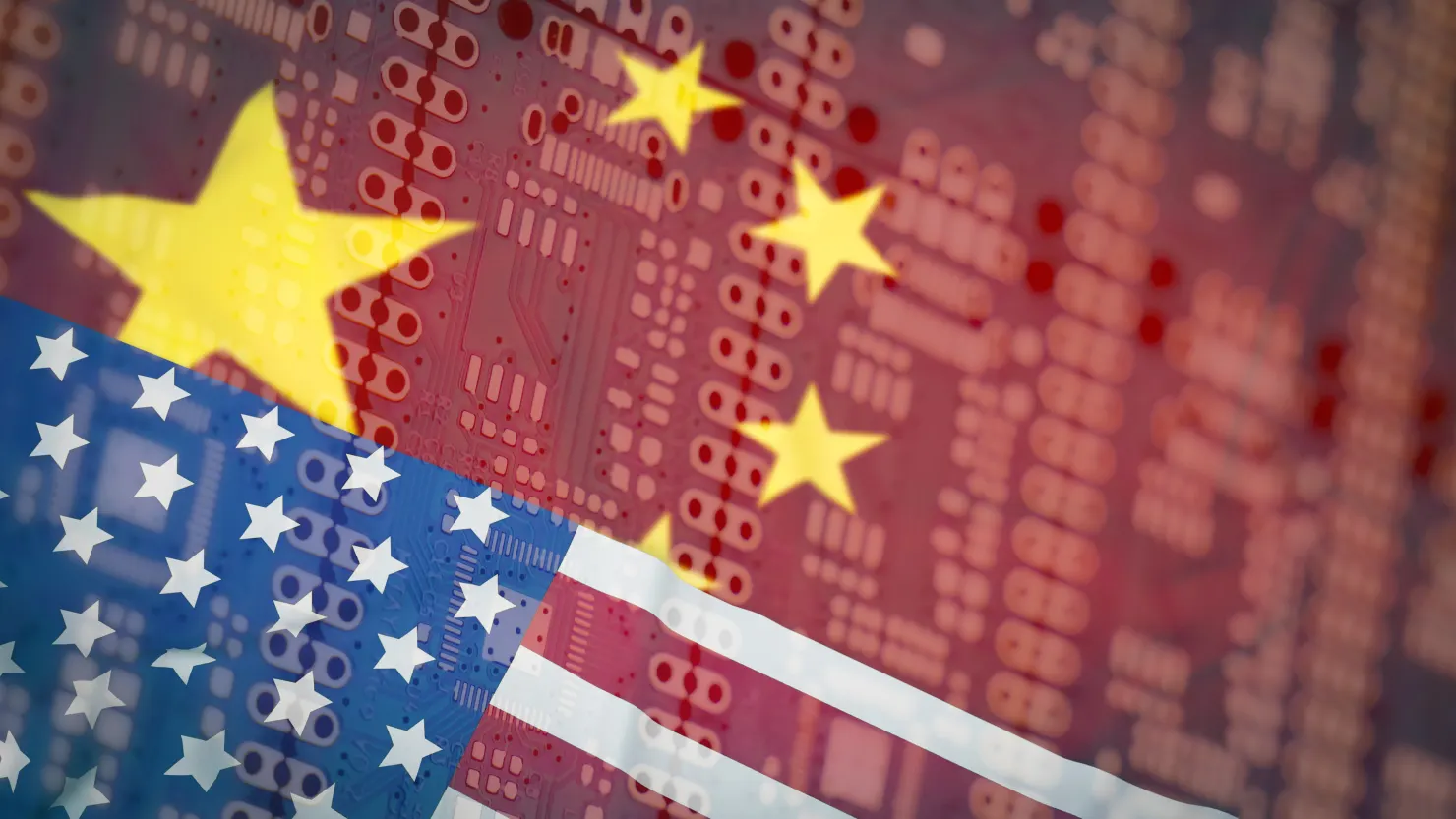
China’s AI Giants Fight Back: How Tencent and Baidu Are Outsmarting U.S. Chip Curbs

The AI Arms Race Heats Up
In the global race for artificial intelligence supremacy, the U.S. has tightened its grip on semiconductor exports to China, aiming to curb Beijing’s access to advanced AI technologies. However, Chinese tech giants like Tencent and Baidu are not backing down. Instead, they’re employing strategic moves to stay competitive in the AI arena.
U.S. Export Restrictions: A New Challenge
In April 2025, the U.S. imposed stricter export controls on AI chips, including those from Nvidia and AMD. These measures were designed to prevent Chinese entities from accessing cutting-edge technologies that could enhance their AI capabilities. As a result, companies like Nvidia faced significant financial setbacks, with Nvidia projecting a $5.5 billion loss due to the new restrictions .
China’s Strategic Responses
1. Stockpiling Semiconductors
Anticipating the tightening of U.S. export controls, Chinese companies began stockpiling essential components. Notably, Huawei and Baidu secured high-bandwidth memory (HBM) chips from Samsung, ensuring they had the necessary resources to continue their AI developments without interruption .
2. Leveraging Domestic Alternatives
To reduce reliance on foreign technology, Baidu has turned to domestic AI chips. In a significant move, Baidu ordered 1,600 of Huawei’s Ascend 910B AI chips, marking a shift towards local solutions in the face of external pressures .
3. Enhancing AI Model Efficiency
Both Tencent and Baidu are investing in optimizing their AI models to function efficiently with the available hardware. By refining algorithms and improving software, these companies aim to maximize performance even with potentially less powerful chips.
The Bigger Picture: A Shift in the AI Landscape
The U.S. export restrictions have inadvertently accelerated China’s efforts to develop self-reliant AI technologies. While companies like Nvidia and AMD face challenges in accessing the Chinese market, Chinese firms are capitalizing on the opportunity to advance their own capabilities.
Nvidia CEO Jensen Huang criticized the U.S. export controls, stating that they have led to a significant loss of market share in China, from 95% to 50% over four years. He also noted that these measures have spurred Chinese companies to accelerate their AI developments .
The Evolving AI Race
The tightening of U.S. export controls has added complexity to the global AI race. While the U.S. aims to maintain its technological edge, China’s proactive strategies are enabling its tech giants to continue advancing in AI. This dynamic underscores the importance of adaptability and innovation in the ever-evolving tech landscape.

