
Trump’s Tariff Shock: Experts Warn of Economic Chaos – Here’s What You Need to Know

Brace yourselves, because President Donald Trump’s latest tariff announcement is shaking up the economy in ways you won’t believe. On Wednesday, he unveiled new tariffs targeting over 180 countries and territories, and the backlash was immediate. Stock markets tanked, investors scrambled for safe havens, and economists are now predicting major economic fallout. Could these tariffs push the U.S. into a recession? Experts are warning that things could get much worse. Here’s a breakdown of the chaos and what this means for your wallet.
What Are Trump’s New Tariffs and Why Should You Care?
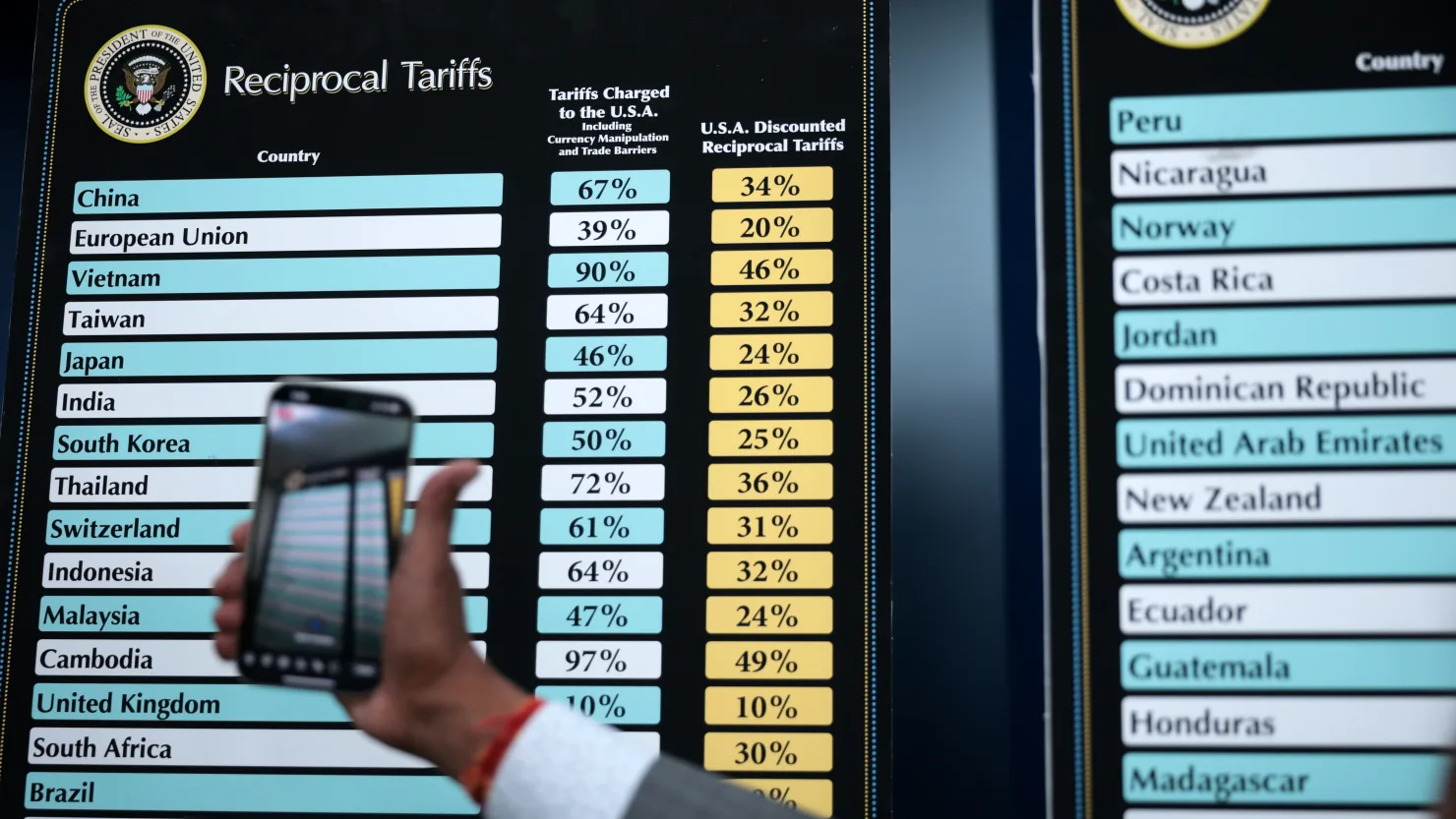
You’ve probably heard the term “reciprocal tariffs” floating around. But what does it really mean? In simple terms, reciprocal tariffs are when the U.S. imposes taxes on goods from other countries based on the tariffs those countries charge on American goods. If a country hits U.S. products with a high tariff, the U.S. retaliates with a similar tax on their goods.
Sounds fair, right? The problem is — it’s more complicated than that. The U.S. has slapped tariffs on hundreds of countries, including major trading partners like China, Canada, and the EU. And guess what? It’s already sending shockwaves through global markets.
Stocks Plummet – Is a Recession Coming?
Here’s where things get really interesting: as soon as Trump’s tariff plan dropped, stocks took a nosedive. Investors panicked and started rushing to safer assets like gold. Why? Well, tariffs aren’t just about taxes; they can mess with the flow of trade, jack up the prices of goods, and cause all kinds of economic turmoil.
Experts are now predicting that these tariffs could set the U.S. on a path to recession. Yep, you read that right: a recession. As businesses face rising costs and consumers pay more for everything from electronics to food, the economy could take a serious hit. In fact, some analysts are already saying the U.S. is heading for economic disaster.
“Absolutely Nothing Good” – J.P. Morgan’s Dire Warning
Let’s look at what the experts are saying. Tai Hui, Chief Market Strategist at J.P. Morgan Asset Management, did not hold back. When asked about Trump’s new tariffs, he said: “There’s absolutely nothing good” coming from them. Harsh words, but he’s not alone.
Hui points out that these tariffs will raise the price of imports and hurt U.S. consumers. From smartphones to cars, if it’s made overseas, it’s going to get more expensive. And it’s not just about imports. U.S. businesses that rely on foreign materials or products will face higher costs, too. That means everything you buy could start costing you more. Talk about a punch to the gut for your budget.
Why This Could Lead to a Full-Blown Trade War
But wait, it gets even worse. Many of the countries hit by these tariffs, like China, the EU, and Canada, are not going to take this lying down. They’ve already warned they’ll retaliate with their own tariffs on U.S. goods, which could lead to a full-blown trade war. And once that starts, it could lead to more expensive products, slower economic growth, and potentially widespread job losses.
Imagine a world where everything from the food you eat to the clothes you wear costs more, all because countries are battling it out with tariffs. If that sounds like a nightmare, it’s because it could become a reality.
Is This the End of Global Trade as We Know It?
Here’s the crazy part: The U.S. isn’t just targeting countries with which it has trade deficits — it’s going after everyone. That means even countries like Japan and the UK, with which the U.S. has a trade surplus, are getting hit with tariffs. What does this mean for global trade? Chaos.
If these tariffs escalate into a global trade war, we could see supply chains disrupted, prices spike across the board, and a serious slowdown in global trade. This isn’t just bad for businesses — it’s bad for everyone. From the mom-and-pop shop to the big multinational corporations, no one is safe from the fallout.
So, What Does This Mean for YOU?
Here’s the bottom line: Higher prices on everything from electronics to food. If you were planning on buying a new iPhone or upgrading your car, you might want to reconsider. The U.S. has just made things more expensive, and the ripple effect will be felt across the country. Expect to see prices go up as businesses pass on their increased costs to consumers.
But that’s not all. If the U.S. faces retaliation from other countries, you could see job losses, especially in industries that rely on international trade. This isn’t just about tariffs — it’s about the potential to spiral into a full-scale economic meltdown.
The Uncertain Future: Will Trump’s Tariffs Pay Off?
So, will these tariffs solve the U.S. trade deficit problem? The experts aren’t so sure. While Trump argues that these tariffs will bring jobs back to the U.S. and help the economy, many analysts believe they’ll do the opposite. Higher costs could push businesses overseas, and consumers will suffer from rising prices.
It’s a risky bet, and right now, there’s no guarantee that it will pay off. In fact, some analysts are already saying that these tariffs could end up hurting American workers more than helping them. So, if you thought tariffs were going to bring jobs home, you might want to think again.
The Takeaway: A Rocky Road Ahead
With Trump’s tariffs, the future of the U.S. economy is looking uncertain. While the administration hopes the tariffs will reduce the trade deficit and boost American manufacturing, the reality might be much more complicated. Higher prices, slower economic growth, and even job losses are all on the table. And if other countries retaliate, we could be facing a global trade war that disrupts everything we know about international trade.
As for you, the consumer? Get ready to pay more for the things you buy, and brace for a bumpy ride ahead.

