
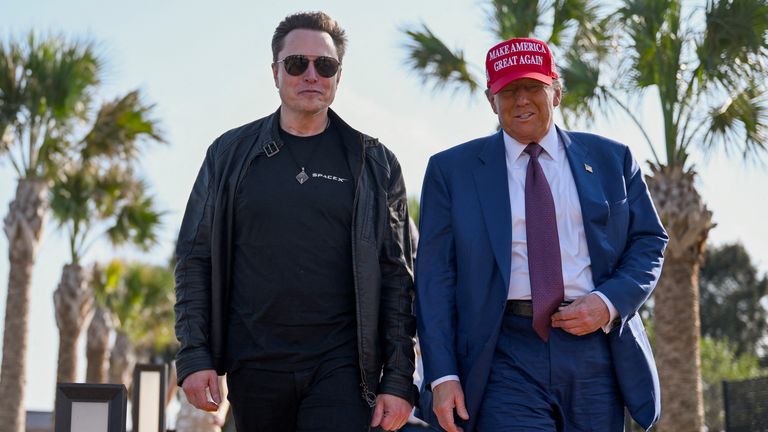
Trump and Musk Watch SpaceX’s Starship Launch: Booster Fails, But the Mission is a Success

Introduction: Trump and Musk’s Big Moment at SpaceX
On a thrilling afternoon in Texas, SpaceX launched its giant Starship rocket into space with none other than U.S. President-elect Donald Trump and tech mogul Elon Musk watching closely. The event was an important milestone for SpaceX’s ambitious plans to reach the Moon and eventually send astronauts to Mars. However, while the Starship rocket soared into space, a key part of the mission — the landing of the Super Heavy booster — didn’t go as planned.
Let’s break down what happened, why this launch matters, and how Elon Musk’s growing influence under Trump could change the future of space exploration.
What Happened During the Launch?
On November 19, 2024, SpaceX launched the 400-foot-tall Starship rocket from its Boca Chica facility in Texas. This rocket is designed for long-duration missions, including landing astronauts on the Moon and transporting them to Mars. It’s SpaceX’s largest and most ambitious project to date.
At the start, everything seemed to go perfectly. The Starship’s first-stage booster, called Super Heavy, detached at about 40 miles above Earth, sending the second-stage Starship rocket on its way to space. But things went awry when SpaceX attempted to bring the Super Heavy booster back to land. Instead of landing on its platform, the booster fell into the Gulf of Mexico, ending in a fiery explosion. This was a setback for SpaceX’s reusable rocket technology, but it didn’t derail the mission entirely.
What Went Right During the Test Flight?
Despite the booster mishap, the Starship test flight achieved several important objectives:
- Successful Engine Restart in Space: Starship was able to reignite one of its onboard engines while in space. This was a major milestone for SpaceX, as previous attempts to do this had failed. The ability to reignite engines in space is key for future missions to the Moon, Mars, and beyond.
- Successful Spaceflight and Splashdown: The Starship rocket orbited Earth and successfully splashed down in the Indian Ocean about 90 minutes later, signaling the spacecraft’s successful operation in space.
- Testing Reentry Heat Resistance: The mission tested Starship’s ability to withstand intense heat during reentry — another crucial aspect of future space travel.
Trump’s Growing Influence on Space Exploration
President-elect Donald Trump was on-site to witness the launch, and his presence highlights the increasingly close relationship between the government and private space companies like SpaceX. Trump’s administration has shown strong support for advancing space exploration, and under his leadership, SpaceX is expected to make faster progress in reaching ambitious goals, including landing astronauts on Mars.
Musk, a long-time Trump supporter, has been appointed to lead a new government project aimed at reducing waste and inefficiencies in the federal government. This partnership suggests Musk could play a central role in shaping the U.S. space agenda during Trump’s second term.
Musk’s ability to work closely with government agencies like NASA is critical for SpaceX’s success. The company has already faced frustrations with government regulations, such as those from the Federal Aviation Administration (FAA), which oversees commercial space flights. However, with faster approvals for its launches, including this recent Starship flight, SpaceX is clearly benefiting from the Trump administration’s focus on space.
What’s Next for SpaceX and Starship?
SpaceX is pushing forward with the development of Starship, aiming for more frequent and faster launches. Musk has set an ambitious goal: SpaceX may launch as many as 400 Starship missions over the next four years, and this rapid pace of launches is critical as SpaceX works toward its goal of reaching Mars.
The second Trump administration is expected to focus more on ambitious space goals, including supporting NASA’s Artemis program to return astronauts to the Moon and possibly setting its sights on Mars. With SpaceX’s technology, these goals seem more achievable than ever before.
Conclusion: SpaceX’s Bright Future Under Trump and Musk’s Leadership
While the recent Starship test flight had a few bumps — particularly with the booster’s failed landing — the mission was still a success, marking significant progress for SpaceX’s ultimate goal of deep space exploration. The partnership between Trump and Musk is likely to help accelerate space exploration, with Musk playing a larger role in shaping U.S. space policy.
SpaceX’s future looks bright as it continues to refine Starship and prepare for a new era of space exploration, potentially with regular missions to the Moon, Mars, and beyond. As Musk’s influence grows under Trump’s presidency, SpaceX is in a prime position to lead the way in space travel, and the world will be watching eagerly to see what happens next.

