

Porsche CEO Weighs in on Potential U.S. Tariff Threat
The U.S. trade policies under President Donald Trump continue to cause uncertainty for businesses worldwide, and now the Porsche CEO, Oliver Blume, has shared his thoughts on how the luxury automaker plans to navigate a potential trade war between the U.S. and Europe. With tariffs on the horizon, Blume is looking toward Porsche’s strong industrial partnership with Volkswagen, the German auto giant, as a possible lifeline in these uncertain times.
In a recent interview, Blume discussed the implications of U.S. tariffs on his company and how Porsche and its Volkswagen Group ties could play a pivotal role in ensuring that the company remains competitive in the American market. But will this industrial cooperation be enough to protect Porsche from the potential fallout of trade tensions? Let’s dive in.
Porsche’s Vulnerability in the U.S. Market
Porsche has been a huge success in the U.S. market, with the American market being the company’s top market. However, Porsche’s lack of manufacturing operations within the United States puts it at a potential disadvantage compared to competitors like Volkswagen. While Porsche benefits from being a part of the Volkswagen Group, which has a major assembly plant in the U.S., the absence of its own U.S. production facilities leaves the brand exposed to trade barriers that could increase costs for American consumers.
Blume, who is also the CEO of Volkswagen Group, stated that this makes it critical for the brand to carefully navigate the evolving trade landscape between the U.S. and Europe. With President Trump threatening to impose tariffs on European imports, including automobiles, the possibility of increased costs for consumers is high. Porsche’s vehicles are made mainly in Germany, which could face higher tariffs if a trade war escalates.
Porsche’s Industrial Cooperation with Volkswagen: A Strong Shield?
So, what’s Porsche’s strategy for handling the looming threat of tariffs? According to Blume, the company will rely heavily on its industrial cooperation agreement with Volkswagen. As both companies work closely together under the Volkswagen Group umbrella, Blume believes their partnership could help shield Porsche from the worst of the potential trade impacts.
“We have an industrial cooperation agreement together with Volkswagen,” Blume explained. “We are working so closely together, so this should play a role in responding to tariffs.”
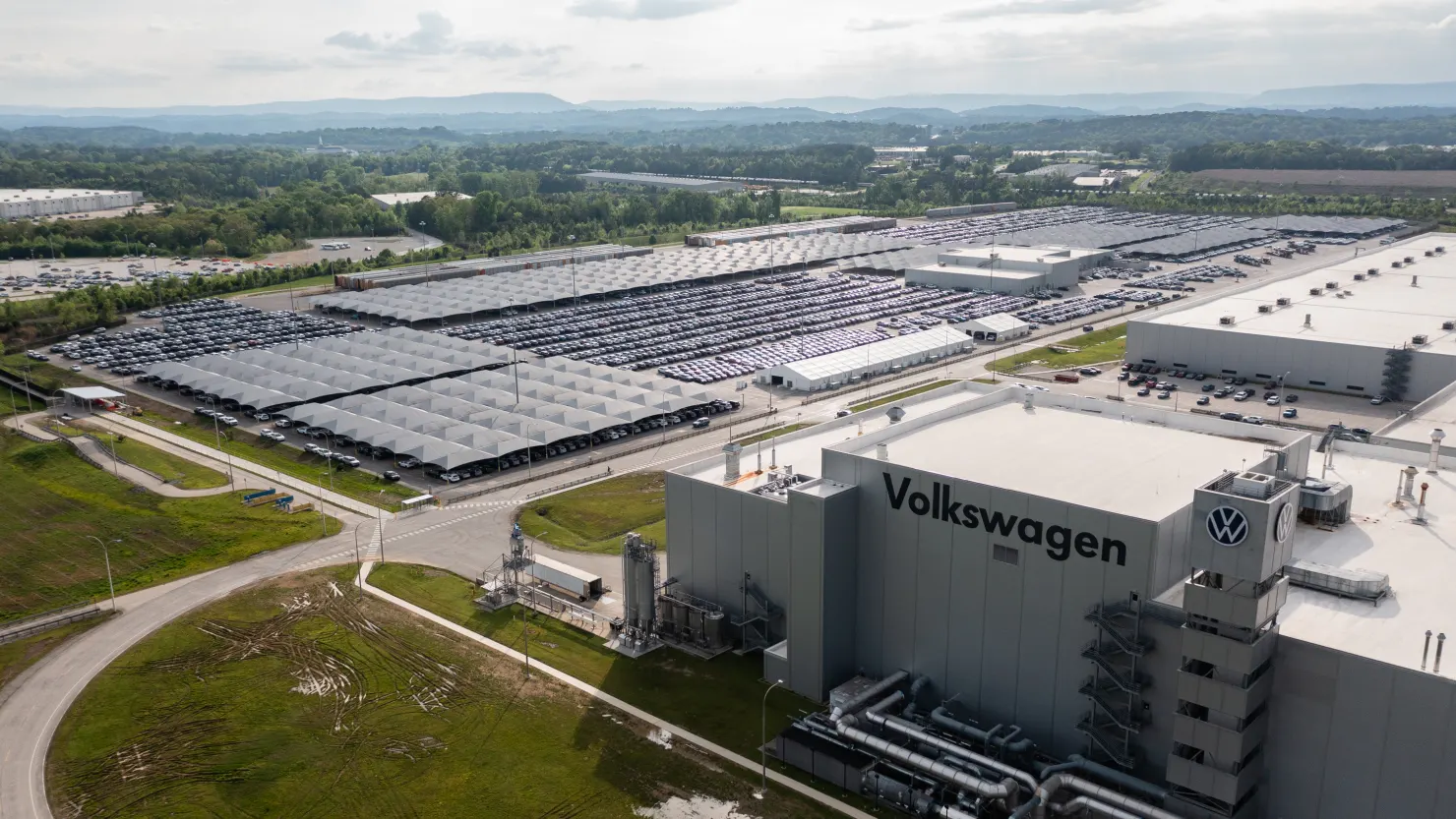
Volkswagen, unlike Porsche, already has significant operations in the U.S. Volkswagen Group owns an assembly plant in Chattanooga, Tennessee, and has invested heavily in the U.S. over the years. This gives them a significant foothold in the American market and positions them as a major player in navigating the challenges of U.S. tariffs. With both Porsche and Volkswagen working in tandem, there’s a hope that their combined efforts will mitigate the negative effects of increased trade barriers.
Blume is optimistic about a “fair solution” between the U.S. and Europe, stating, “My hope is there will be an agreement between Europe and the U.S. … I’m counting on a fair solution between the regions.” Still, Porsche must brace for the possibility that trade tensions could worsen.
Porsche’s Investments in the U.S. Market
Despite the uncertainty surrounding tariffs, Blume emphasized that Porsche is already making significant investments in the U.S. to strengthen its position there. This includes investments in partnerships, services, and its dealer network—all aimed at securing the brand’s future in the American market.
“We are investing heavily in the U.S. in terms of partnerships, services, our own organization, our dealer network. We are employing many, many people in the U.S.,” Blume shared.
He also pointed out that Volkswagen Group has invested more than 15 billion euros in the U.S. market. This includes building facilities like the Chattanooga assembly plant and making further investments in locations like South Carolina, all of which help solidify Volkswagen’s presence in the country. With the U.S. being a crucial market for both Porsche and Volkswagen, their combined efforts will likely help maintain a solid foundation despite rising tariff risks.
Could Porsche Rely More on U.S. Production?
While Porsche does not currently have its own production facilities in the U.S., Blume’s comments hint that the company may continue to explore more ways to invest in U.S.-based operations. As tariffs continue to be a threat, automakers with U.S. production facilities are better positioned to avoid some of the added costs that imports face.
If Porsche were to establish its own assembly plant in the U.S. in the future, it could reduce the impact of tariffs on its cars, making its vehicles more affordable for U.S. customers and helping the company to maintain its market share.
However, such a move would require significant investment and long-term planning. It remains to be seen whether Porsche will take this step, but with the ongoing trade tensions and rising risks of tariffs, it could be something the company has to consider as part of its strategy.
U.S.-Europe Trade War: What Could It Mean for the Auto Industry?
If tariffs between the U.S. and Europe escalate, the implications for the global auto industry could be far-reaching. Higher import tariffs on European cars would likely push prices higher for consumers in the U.S. market, potentially leading to reduced sales and consumer demand. The U.S. automotive sector could also face challenges, as European automakers might retaliate with their own tariffs on American-made vehicles.
However, the Volkswagen Group’s investments in the U.S. and its existing assembly plants put them in a stronger position to weather any storm. With their manufacturing bases in the U.S., they can avoid some of the costs associated with importing vehicles and keep their prices competitive.
Porsche, despite lacking U.S. production facilities, may benefit from Volkswagen’s U.S. presence, relying on the Group’s established operations to absorb some of the risks.
Blume’s Optimism for the Future
Despite the uncertainty, Blume remains cautiously optimistic about finding a fair trade solution between Europe and the U.S. He is hopeful that the trade dispute won’t escalate further, especially as both the U.S. and European economies are closely linked. Blume’s belief in a “fair solution” could help ease concerns among investors, customers, and industry stakeholders.
In the meantime, Porsche is doubling down on its investments in the U.S. to bolster its presence and ensure it remains competitive in the market. While tariffs are a real threat, the strong relationship between Porsche and Volkswagen could offer a way forward as the companies work together to navigate the trade landscape.
Can Porsche Avoid the U.S. Tariff Trap?
As the U.S.-Europe trade war looms, Porsche’s vulnerability to potential tariffs is a key concern for the brand. However, the company’s strong industrial cooperation with Volkswagen offers a possible shield, allowing Porsche to benefit from its parent company’s established U.S. manufacturing base.
Blume’s cautious optimism for a fair solution between the U.S. and Europe signals that there’s still hope for resolution. However, the situation remains fluid, and it’s clear that Porsche must remain agile in navigating the shifting trade landscape. Time will tell whether Porsche can avoid the worst impacts of U.S. tariffs, but the company’s investments in the U.S. market and its strong ties with Volkswagen put it in a relatively strong position to handle the challenges ahead.

