
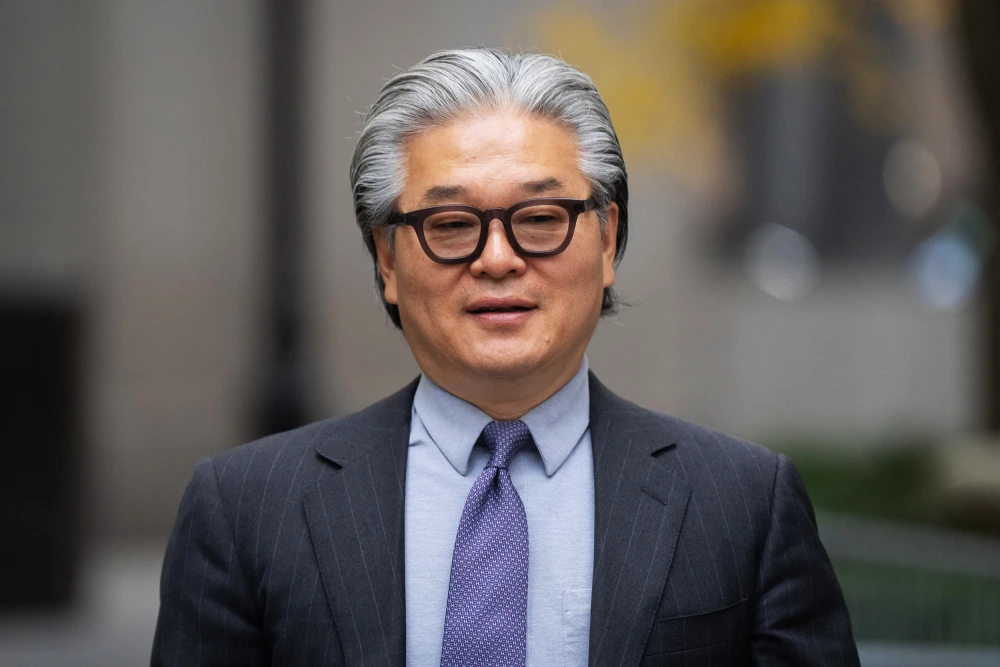
Bill Hwang Sentenced to 18 Years for Archegos Fraud: A Cautionary Tale of Greed and Deception

Bill Hwang, once a billionaire investor, has been sentenced to 18 years in prison for his role in the collapse of Archegos Capital Management. His actions led to a $10 billion loss for Wall Street banks and a financial disaster that shook the world of high finance. The case has become one of the most notorious financial frauds in recent history.
The Collapse of Archegos: A Story of Greed and Deception
In March 2021, the world watched as Archegos Capital Management, led by Bill Hwang, imploded. The firm, which had made huge, leveraged bets on stocks like ViacomCBS (now Paramount Global), saw its entire operation collapse in just days. The crisis led to massive losses for several major banks, including Credit Suisse and Nomura Holdings, wiping out over $100 billion in market value.
For Hwang, a former protégé of legendary investor Julian Robertson, the downfall was swift. Archegos had managed to amass an eye-watering $36 billion in assets, but through risky borrowing, Hwang’s exposure grew to a staggering $160 billion. When stock prices began to fall, Hwang’s firm couldn’t meet margin calls, and the house of cards came crashing down. This event stunned Wall Street and left investors, banks, and employees reeling.
The Criminal Charges Against Bill Hwang
Bill Hwang’s actions didn’t go unnoticed by the law. After a lengthy investigation, Hwang was convicted on 10 criminal charges, including wire fraud, securities fraud, and market manipulation. Prosecutors argued that Hwang had lied to banks about the state of Archegos’ portfolio, misleading them so he could borrow vast sums of money to make even more aggressive bets.
According to U.S. District Judge Alvin Hellerstein, the losses caused by Hwang’s fraud were “larger than any other losses I have dealt with.” This was no small affair—it was a national calamity, as prosecutors described it.
The Sentence: 18 Years in Prison
On Wednesday, Bill Hwang was sentenced to 18 years in prison for his role in the Archegos fraud. This is one of the most severe sentences handed down in a white-collar crime case in recent years, reflecting the scale of the financial damage Hwang caused. While the U.S. Attorney’s office had pushed for a 21-year sentence, Judge Hellerstein ultimately handed down a slightly shorter term.
Before announcing the sentence, Judge Hellerstein asked Hwang’s lawyer, Dani James, to compare him to Sam Bankman-Fried, the disgraced founder of the now-bankrupt FTX exchange. Bankman-Fried was sentenced to 25 years for defrauding FTX customers out of $8 billion. Hwang’s lawyer argued that Hwang’s case was different, stating that he had not stolen from customers, but rather, made reckless bets that led to financial ruin.
The Fallout and What’s Next for Hwang
While Hwang may have thought his Christian faith and charitable efforts—through his nonprofit Grace and Mercy Foundation—would mitigate the severity of his sentence, the court was not swayed. His foundation has donated hundreds of millions of dollars to causes like combating homelessness, poverty, and human trafficking, but this wasn’t enough to offset the $10 billion lost due to his actions.
Hwang’s lawyers have said his net worth has plummeted to just over $55 million, a sharp contrast to the wealth he once enjoyed. Despite his defense team’s request for no prison time and a focus on his charitable work, Hwang’s criminal conviction stood firm.
His co-defendant, Patrick Halligan, Archegos’ former CFO, was also convicted of multiple charges and is awaiting sentencing in January 2024.
A Cautionary Tale for the Financial World
Bill Hwang’s story serves as a cautionary tale for anyone in the world of high finance. His arrogance, greed, and reckless betting with other people’s money led to devastating consequences for both investors and the broader financial system.
Hwang’s case also highlights the fine line between entrepreneurial ambition and fraudulent activity. While he started Archegos with the goal of making it a successful family office, his desire to amass more power and wealth led him down a dangerous path. As the story of Archegos Capital continues to unravel, it raises important questions about oversight, regulation, and the lengths to which some will go to maintain their wealth.
The Broader Impact on the Financial System
The collapse of Archegos didn’t just affect Hwang and his investors. It had wide-reaching consequences across the financial world. Major banks, including Credit Suisse and Nomura, suffered catastrophic losses. Credit Suisse alone lost $5.5 billion, which contributed to the bank’s eventual merger with UBS. The Archegos debacle is seen as a key moment in understanding the dangers of unregulated financial products like total return swaps, which were at the center of Archegos’ risky bets.
What’s Next for Bill Hwang?
While Bill Hwang prepares to begin his 18-year prison sentence, the financial world will likely continue to analyze his case for years to come. The DOJ has not yet determined whether Hwang will need to forfeit his assets or pay restitution to the victims of the Archegos collapse, but his fall from grace has already had a profound impact on how financial crimes are prosecuted.
As for Hwang, his legacy will likely be defined by the massive losses and the fraud that destroyed his fortune and reputation. For the financial industry, the Archegos case is a stark reminder of the risks posed by unchecked leverage and market manipulation.
Conclusion
The sentencing of Bill Hwang to 18 years in prison for his role in the Archegos fraud is a major moment in the world of financial regulation. It’s a story of greed, reckless ambition, and ultimately, devastation. Hwang’s actions led to one of the largest financial disasters in recent history, and the sentence serves as a powerful reminder of the consequences of financial misconduct.

