
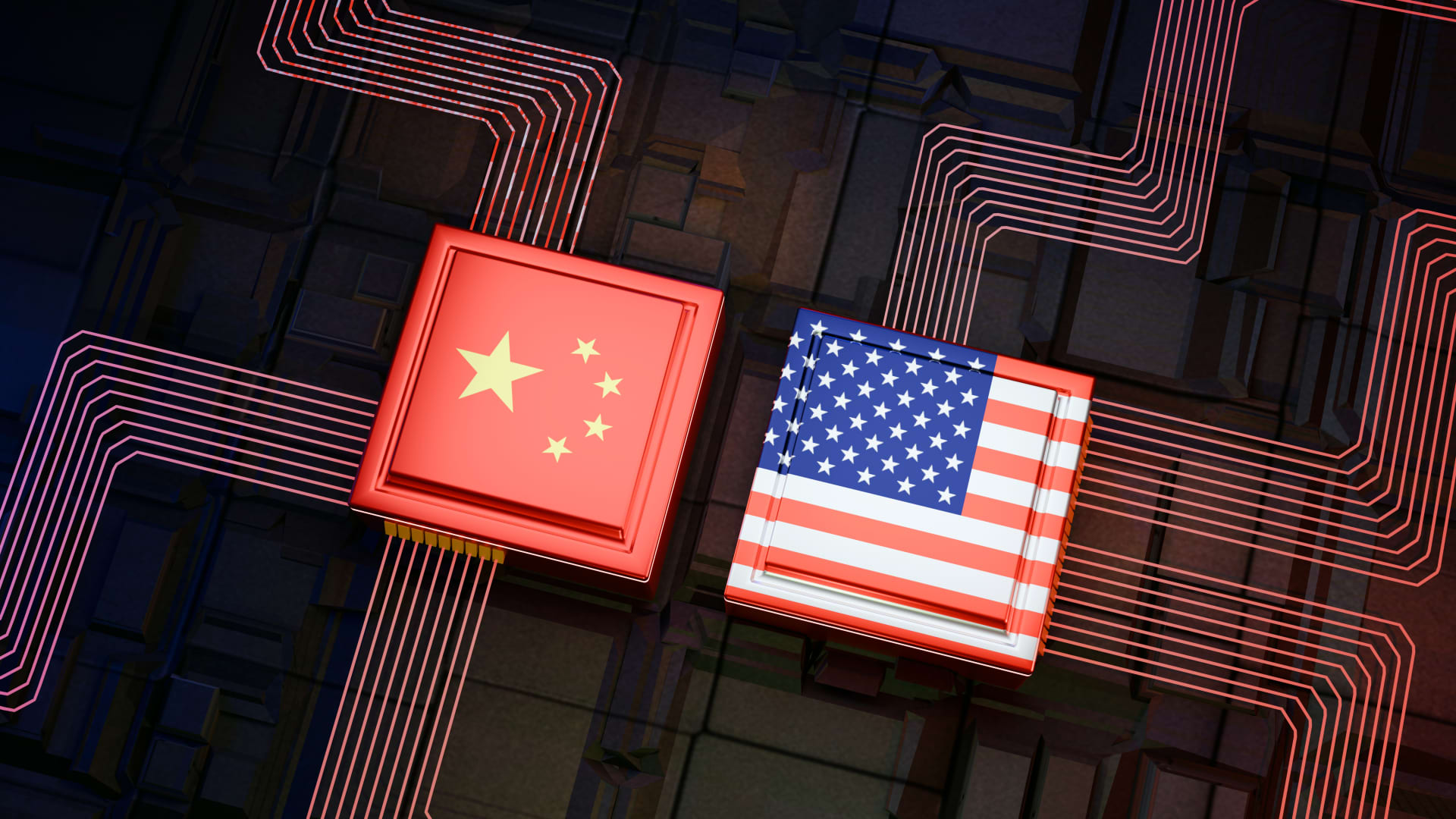

In a surprising move, major Asian chip stocks surged on Tuesday, brushing aside the latest U.S. export curbs targeting China’s semiconductor industry. Despite concerns over these restrictions, investors seemed optimistic, especially in companies outside China.
Asian Chip Stocks Rally as U.S. Curbs Take Effect
The Biden administration recently imposed fresh export restrictions on China, aiming to curb its access to advanced semiconductor technology. These restrictions specifically target high-end chips that are crucial for China’s technology and military advancements. However, Asian chip stocks, including major players from Taiwan and Japan, remained resilient, with many seeing notable gains.
TSMC and Japan’s Chip Companies Lead the Way
Taiwan Semiconductor Manufacturing Company (TSMC), the world’s largest contract chipmaker, was among the biggest gainers. Its shares rose by 2.4%, despite the looming export controls. This optimistic sentiment wasn’t limited to Taiwan. Several Japanese tech companies involved in chip manufacturing also saw their stocks climb.
- Tokyo Electron jumped 4.7%
- Lasertec surged 6.7%
- Advantest gained 3.9%
- Renesas Electronics advanced 2.2%
These gains reflect a broader positive trend in the Asian semiconductor market, which appears to be shrugging off the fears surrounding U.S. sanctions on China.
South Korean Chip Makers: Rising Despite Restrictions
Even South Korea’s semiconductor giants, Samsung and SK Hynix, managed to stay afloat in the market, despite being directly impacted by the new U.S. curbs. These companies are among the largest producers of memory chips, including high-bandwidth memory chips, which are now included in the restrictions.
- Samsung Electronics saw a modest rise of 0.9%
- SK Hynix rose 1.8%
Derrick Irwin, a portfolio manager at Allspring Global Investments, shared his perspective, saying that although the new curbs would impact South Korean companies, the effect would likely be limited. “The sales of high-bandwidth memory chips to China are relatively small for these players,” Irwin explained. “They’ll likely shift demand to the U.S. and other markets.”
The U.S. Targets China’s Semiconductor Industry
The latest round of U.S. sanctions has targeted 140 Chinese companies, including major players like Naura Technology Group, Piotech, and ACM Research. These companies are now prohibited from receiving advanced semiconductor technology from U.S. suppliers.
As a result, shares of Naura Technology and ACM Research fell by 3% and 1%, respectively, in the Chinese stock market. Meanwhile, Piotech saw a slight increase of 1%. In Hong Kong, Semiconductor Manufacturing International Corporation (SMIC), China’s largest chipmaker, dropped 1.5%.
These sanctions are part of a broader U.S. strategy aimed at preventing China from developing its own advanced semiconductor manufacturing capabilities, which are considered critical for national security and military advancements.
U.S. Government’s Strategic Move
U.S. Secretary of Commerce, Gina Raimondo, explained the purpose behind the latest export controls. “These actions are the culmination of the Biden-Harris Administration’s targeted approach to impair China’s ability to indigenize the production of advanced technologies that pose a risk to our national security,” she stated.
In addition to targeting companies, the new U.S. restrictions also cover 24 types of semiconductor manufacturing equipment and three types of software tools used in chip development. These expanded controls aim to further prevent China from bypassing the restrictions and advancing its semiconductor capabilities.
The Chip War: How TSMC and Others Are Navigating the Tensions
The ongoing semiconductor battle between the U.S. and China has raised questions about the effectiveness of the restrictions. Last month, concerns arose when a chip produced by TSMC was discovered in a Huawei product, suggesting that China may still be able to access advanced semiconductor technology despite the sanctions.
In response, the U.S. has introduced new “red flag guidance” to help enforce compliance with the sanctions and avoid loopholes that could allow China to obtain restricted technology. These measures, along with several other regulatory changes, aim to close any gaps in the current restrictions and make it more difficult for China to circumvent the rules.
Impact on the Semiconductor Industry: What’s Next?
While the immediate market reaction has been positive for Asian chip stocks, the long-term impact of these sanctions remains uncertain. On one hand, the export restrictions could push Chinese companies to accelerate their efforts to develop homegrown semiconductor technology. On the other hand, companies outside China, particularly those in Taiwan and Japan, may benefit from China’s continued reliance on foreign chip suppliers.
The rising demand for chips in global markets, combined with these trade tensions, suggests that the semiconductor industry will remain a key area of focus in the coming years. Companies like TSMC, Samsung, and SK Hynix are poised to benefit from the ongoing shifts in the global supply chain.
Conclusion: The Semiconductor Battle Continues
As the U.S. continues to impose semiconductor export restrictions on China, major Asian chip stocks seem to be largely unaffected for now. Companies like TSMC, Tokyo Electron, and SK Hynix have all seen positive stock performance despite the new measures. However, with the ongoing U.S.-China trade tensions, the semiconductor industry is likely to face continued uncertainty in the future.
For now, investors remain optimistic about the prospects of Asian chipmakers outside of China, especially as these companies continue to navigate the evolving geopolitical landscape.

