
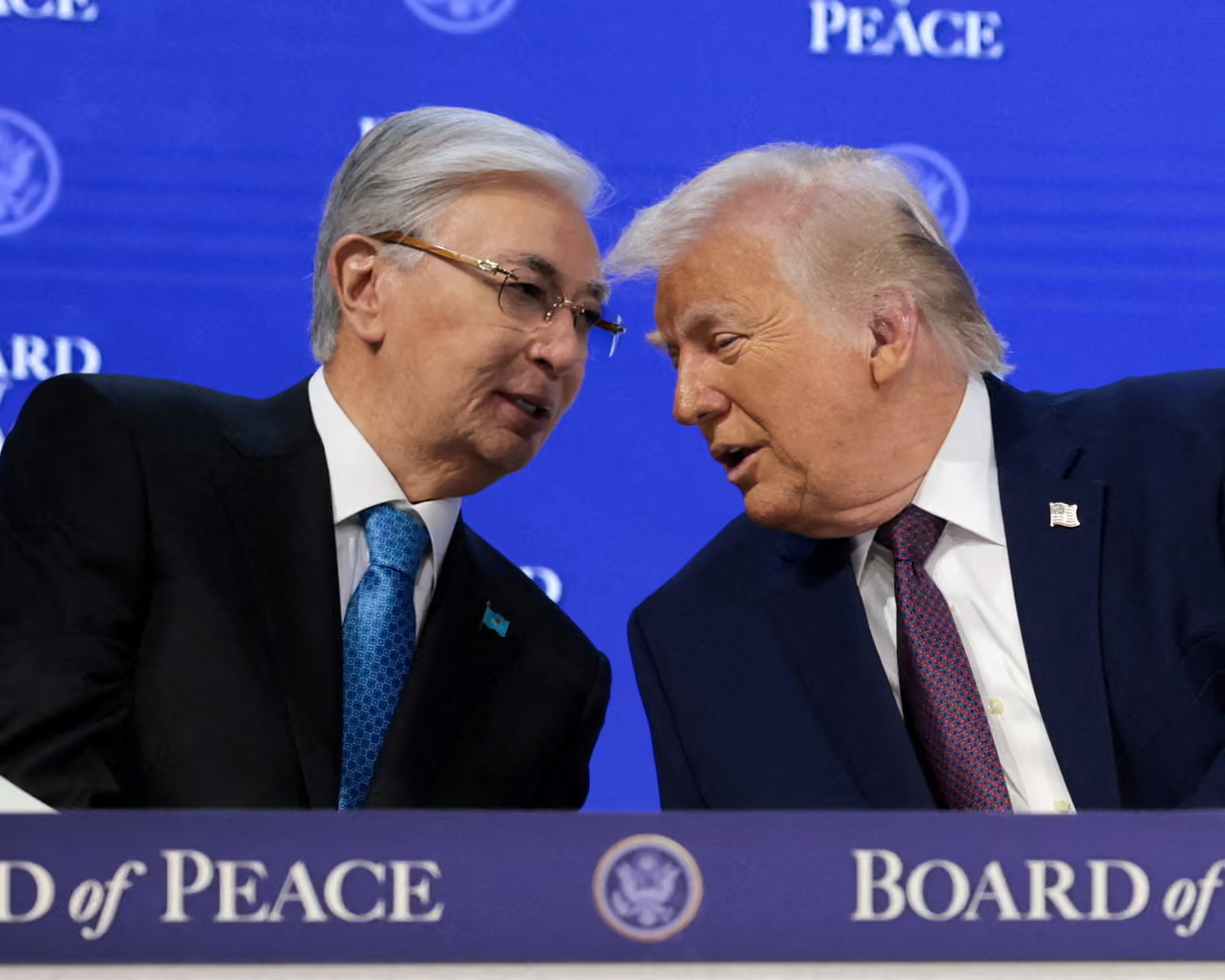

A number of repressive and authoritarian regimes are sending representatives to Washington for the inaugural meeting of former U.S. President Donald Trump’s newly established Board of Peace. The body, created to implement Trump’s vision for Gaza after the city’s destruction, has been described by its founder as “the most consequential international body in history.”
The initiative has drawn skepticism from global powers, including the U.S.’s traditional allies, who see it as a potential attempt to bypass the United Nations and create a fee-based members’ club under the authority of a single individual.
Attendance and Representation
While the Board of Peace reportedly has more than 20 members, it is unclear how many leaders or envoys will attend the first meeting on Thursday. To accommodate, several governments such as Italy and Greece are sending observers rather than full representatives.
Notably, many of the confirmed founding member countries are:
- Military regimes or dictatorships with poor records on political rights and civil liberties.
- Countries that may have joined the Board to appease Trump rather than out of genuine commitment to peace initiatives.
The participation of these regimes has sparked concern about the credibility and purpose of the body, with critics arguing that it undermines democratic norms in international diplomacy.
Concerns from Democracies
Several democratic nations have chosen to stay away, citing:
- The absence of checks and balances in a Trump-led, fee-based international body.
- Potential conflicts with existing United Nations frameworks and resolutions.
- Risk of legitimizing authoritarian regimes under the guise of “peacebuilding.”
Freedom House, an independent watchdog tracking political rights and civil liberties, has highlighted that many member states rank poorly in its annual democracy index. This adds to fears that the Board may amplify the influence of oppressive regimes while sidelining more democratic voices.
Trump’s Vision for Gaza
Trump has positioned the Board of Peace as a vehicle to shape Gaza’s reconstruction and broader Middle East peace initiatives. Key aspects of his vision include:
- Direct involvement of member countries in post-conflict planning.
- A more centralized, U.S.-led approach to decision-making, reducing reliance on traditional multilateral institutions.
- The potential for member states to contribute financially, giving them a stake in the process.
While proponents argue that the Board could expedite aid and reconstruction, critics warn it risks consolidating power in ways that may benefit authoritarian members over civilian populations in Gaza.
International Reactions
- Supporters: Some member countries see the Board as an opportunity to gain influence and participate in shaping Middle East policy.
- Skeptics: Many international observers, including democratic governments and civil society organizations, have voiced concerns about the body’s legitimacy.
- Human Rights Advocates: They highlight the irony of repressive governments helping shape “peace” while lacking internal political freedoms.
Observers will be closely watching how the inaugural meeting unfolds and whether Trump’s vision will produce tangible outcomes or merely a symbolic gathering.
Looking Ahead
The Board of Peace raises significant questions about the future of international diplomacy:
- Will authoritarian influence dominate over democratic principles?
- Can the Board function effectively outside traditional UN frameworks?
- How will this initiative affect the reconstruction of Gaza and broader Middle East stability?
As the world watches, the inaugural meeting will serve as a litmus test for Trump’s ability to implement a unilateral approach to global peace efforts.

