
Trump Tariffs Explained: Why Asia Is Bearing the Brunt of the Biggest US Trade Shake-Up in a Century

In one of the most aggressive trade moves in modern US history, former President Donald Trump has reignited his tariff war—this time targeting a wider swath of global economies, with Asian nations facing the sharpest blows. With the deadline for negotiations now extended to August 1, the world is watching closely to see whether trade diplomacy prevails or economic walls go up even higher.
What Are Trump’s “Reciprocal Tariffs”?
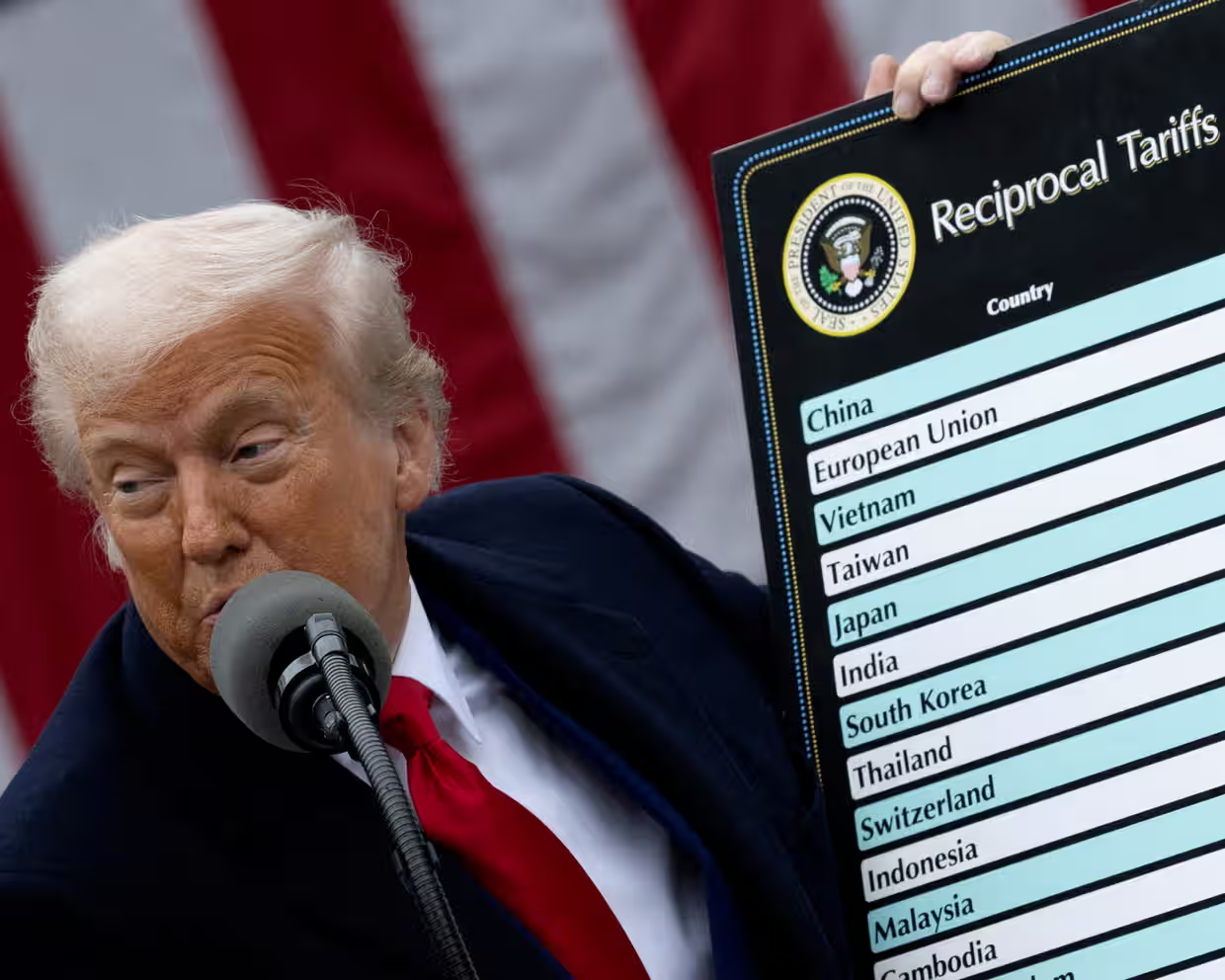
Trump’s tariff crusade is rooted in what he calls “reciprocal trade justice”—the belief that countries imposing higher duties on US exports should face equal or higher tariffs in return. Originally floated in April 2025, the plan aimed to create a more “balanced” trade environment and punish what Trump labeled as “decades of unfair treatment.”
The administration announced a baseline 10% tariff on most imports, with certain countries facing customized, country-specific tariff rates as high as 40%. However, facing backlash and lack of consensus from trade partners, Trump agreed to a 90-day delay for negotiations.
That delay has now been extended, but not without consequences.
Why Has the Deadline Been Extended to August?
Trump’s administration initially gave foreign governments a 90-day window to strike new trade deals. That window was set to expire in early July. However, as talks stalled and backlash mounted from US businesses, investors, and international governments, Trump unilaterally pushed the deadline to August 1.
Despite the delay, he has already announced finalized tariffs on 14 countries, including major Asian economies like Japan, South Korea, Malaysia, Thailand, and Indonesia, saying the US “can’t wait forever.”
Which Countries Are Being Hit and By How Much?
Here’s a breakdown of some of the steepest tariffs Trump has announced so far:
- Japan – 25%
- South Korea – 25%
- Myanmar – 40%
- Laos – 40%
- Malaysia – 25%
- Thailand – 36%
- Indonesia – 32%
- Bangladesh – 35%
- Cambodia – 36%
Other countries hit include South Africa, Tunisia, Kazakhstan, Serbia, and Bosnia and Herzegovina, with rates ranging from 25% to 35%.
Why Are Asian Nations Being Targeted?
Trump claims these nations are major contributors to the US trade deficit, arguing that they engage in currency manipulation, impose non-tariff barriers, or benefit from unfair trade arrangements. In particular:
- Japan and South Korea are long-standing allies but have sizable trade surpluses with the US.
- Southeast Asian countries like Malaysia, Thailand, and Vietnam (expected to be next) have become export powerhouses—often offering cheaper manufacturing alternatives to China.
- Developing nations such as Cambodia and Bangladesh are accused of exploiting US trade preference programs without offering equal access to their markets.
This strategy also aligns with Trump’s “America First” manufacturing agenda, where he wants foreign companies to shift production to US soil in order to avoid tariffs.
How Have Markets and Governments Reacted?
The tariff announcements have sent shockwaves through global markets:
- The Dow Jones Industrial Average dropped over 450 points, with similar declines across the S&P 500 and Nasdaq.
- Major Asian stock exchanges, including Tokyo and Seoul, also saw significant dips.
- Many countries expressed outrage, with officials from Japan, South Korea, and ASEAN nations preparing joint responses or considering WTO appeals.
However, some governments are quietly opening backchannel talks with US trade envoys, hoping to avoid full implementation by the August 1 deadline.
What’s at Stake for the Global Economy?
These tariffs are the largest set of trade penalties imposed by the US since the 1930s Smoot-Hawley Tariff Act, a move many economists say contributed to the Great Depression. While Trump argues they’ll bring back American jobs, critics warn they could:
- Trigger retaliatory tariffs from affected countries
- Disrupt global supply chains, especially in electronics, textiles, and automotive parts
- Raise consumer prices in the US, particularly on goods like electronics, clothing, and appliances
- Deepen geopolitical tensions, particularly in the Indo-Pacific
What Happens If Countries Retaliate?
Trump has already warned that any counter-tariffs will be met with even steeper penalties. In his letter to South Korean officials, he stated:
“If your government attempts to increase tariffs on American goods in retaliation, we will impose the same rate on top of the existing tariff.”
This signals an escalating cycle of tit-for-tat measures that could spiral into a broader global trade war.
Is There a Way Out?
Yes—but time is running out. Trump has dangled the possibility of tariff exemptions for countries that:
- Strike bilateral trade deals with the US before August 1
- Relocate manufacturing operations to American soil
- Demonstrate “good-faith negotiations” on key sticking points
But many global leaders remain skeptical of Trump’s unilateral style and are pressing for multilateral engagement, possibly through the World Trade Organization (WTO) or G20 trade councils.
Final Thoughts
Trump’s tariff plan is not just another chapter in US trade policy—it represents a radical overhaul of how America does business with the world. With Asian nations taking the brunt of the blow, the risk of a global supply chain crisis is rising, especially if negotiations falter.
Whether these aggressive measures lead to “fairer trade” or economic instability depends on what happens before the new August 1 deadline.
One thing is clear: the era of passive globalization is over, and a more confrontational phase of trade geopolitics has begun.

