
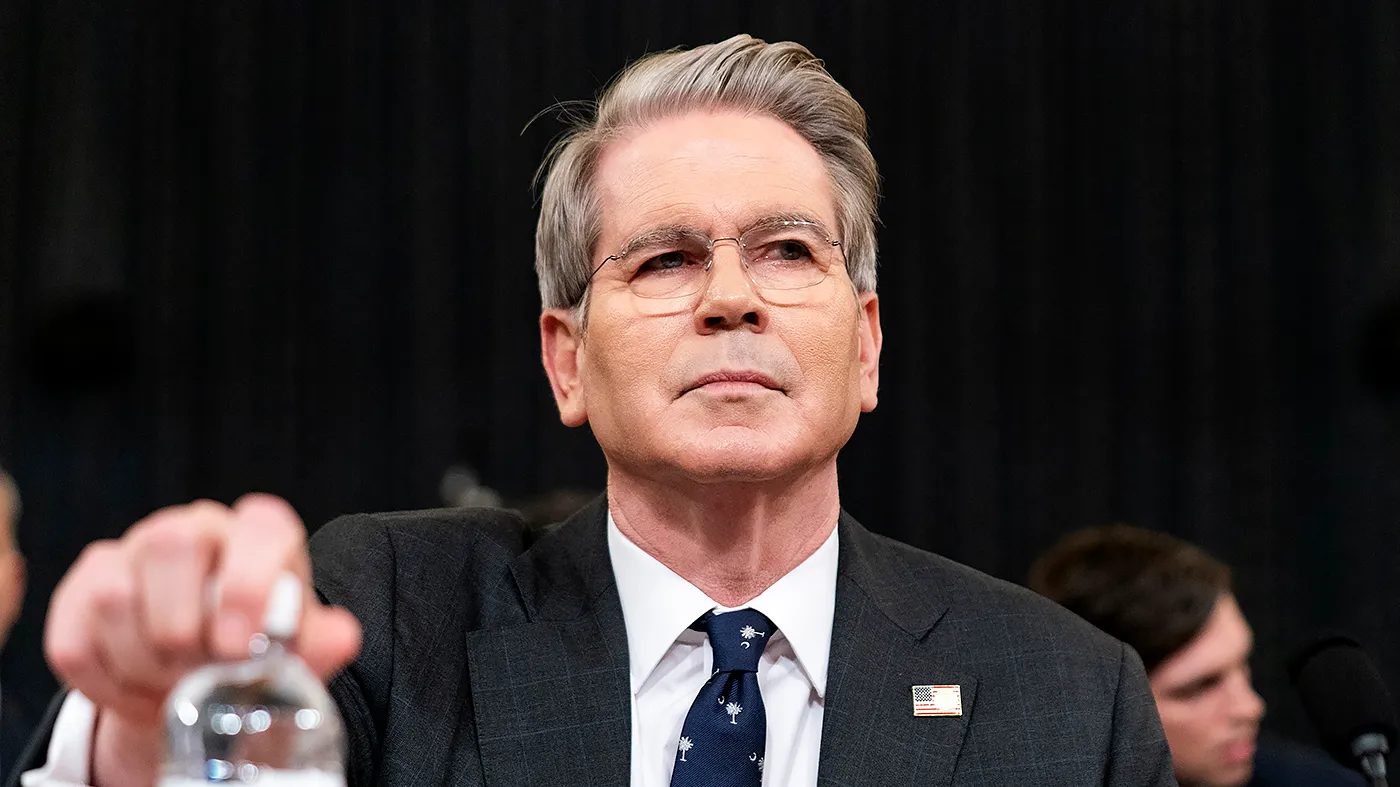
Treasury Secretary Bessent Defends Fed’s Independence but Acknowledges Mistakes Amid Trump’s Criticism

U.S. Treasury Secretary Scott Bessent offered a nuanced perspective on the Federal Reserve’s role and performance in a recent statement, emphasizing the importance of the institution’s independence while acknowledging that it has made significant errors. At the same time, Bessent supported President Donald Trump’s controversial decision to fire Federal Reserve Governor Lisa Cook, who faced allegations of mortgage fraud.
The Federal Reserve’s Independence Is Crucial, Says Bessent
In remarks delivered on Monday, Secretary Bessent underscored the foundational principle that the Federal Reserve must operate independently from political influence. The Fed’s autonomy is widely regarded as essential for maintaining stable monetary policy, free from short-term political pressures that could undermine long-term economic health.
“The Federal Reserve is and should remain independent,” Bessent affirmed. He noted that an independent central bank is critical to upholding credibility in financial markets and ensuring decisions are made based on economic data rather than political agendas.
This declaration comes amid heightened tensions between the White House and the Federal Reserve, which have escalated over the past several months. President Trump has repeatedly criticized Fed Chair Jerome Powell and the institution at large for not cutting interest rates quickly enough, arguing that more aggressive monetary easing is necessary to sustain economic growth and maintain a competitive edge globally.
Acknowledging Mistakes: A Rare Admission
While defending the Fed’s independence, Bessent did not shy away from acknowledging that the central bank has made a number of mistakes. Though he did not specify every error, the admission marks a notable departure from the more common public posture of unwavering support for the Fed’s policies.
The Federal Reserve’s management of interest rates, its response to inflationary pressures, and its handling of economic crises have often been points of contention among policymakers, economists, and market participants alike.
Bessent’s comments suggest a growing recognition within the Treasury Department that the Fed’s policies and decisions have not been flawless and that some of its actions—or inactions—may have contributed to current economic challenges.
Trump’s Criticism and the Firing of Lisa Cook
President Trump has been vocal in his criticism of the Fed, particularly targeting Chair Jerome Powell. Over the past several months, Trump has accused Powell of failing to adequately lower interest rates, which Trump believes would spur investment and economic activity.
Most recently, Trump’s ire extended to a costly renovation project at the Federal Reserve’s Washington headquarters, which he described as a wasteful expenditure amid ongoing economic concerns.
Adding to the turmoil, Trump fired Federal Reserve Governor Lisa Cook following allegations of mortgage fraud. The dismissal sparked a wave of debate over whether such personnel decisions should be subject to political influence or if they undermine the Fed’s independence.
Secretary Bessent defended Trump’s action, arguing that it was within the president’s rights. However, he did not explicitly endorse the specific allegations against Cook or comment on the merits of the case itself.
The Broader Context of Fed-White House Relations
The strained relationship between the White House and the Federal Reserve is not new, but it has intensified under the Trump administration. The president’s push for lower interest rates often clashes with the Fed’s dual mandate to maintain maximum employment and stable prices.
Chair Powell, appointed by Trump in 2018, has sought to balance these competing pressures by gradually adjusting monetary policy in response to evolving economic conditions. However, the Fed’s cautious approach has frequently drawn ire from the president, who favors more aggressive rate cuts to boost short-term growth.
Economists and market analysts have expressed concern that such politicization of central banking could undermine the Fed’s credibility and independence—two pillars critical to maintaining investor confidence and long-term economic stability.
The Importance of an Independent Fed
The independence of the Federal Reserve has been a cornerstone of U.S. economic policy for decades. It allows the Fed to make decisions based on rigorous economic analysis and data, rather than political considerations, which can sometimes prioritize short-term gains over long-term sustainability.
Historically, countries with politically independent central banks tend to have lower inflation rates and more stable economies. This independence also reassures markets that monetary policy will be predictable and not subject to the whims of changing political administrations.
Bessent’s reaffirmation of this principle highlights the ongoing importance of safeguarding the Fed’s autonomy, even amid political disagreements.
What This Means for Markets and Policy Going Forward
Bessent’s candid acknowledgment of the Fed’s mistakes combined with his defense of its independence paints a complex picture of the institution’s current standing. It suggests that while the Fed remains a key pillar of U.S. economic governance, it must also reckon with past errors and adapt to changing economic realities.
Investors and policymakers will be closely watching how the Fed responds to these internal and external pressures, particularly as inflation concerns persist and global economic uncertainties remain high.
The Treasury Secretary’s statements also underscore the ongoing debate over the appropriate balance between political oversight and operational independence within the central bank—an issue that will likely remain contentious in the months and years ahead.
Treasury Secretary Scott Bessent’s remarks provide a rare window into the delicate dynamics between the Federal Reserve and the White House. His support for the Fed’s independence coupled with a frank admission of its mistakes signals a willingness within the Treasury to acknowledge challenges while protecting the institution’s autonomy.
Meanwhile, President Trump’s criticism of the Fed and high-profile personnel decisions like the firing of Lisa Cook continue to stir debate about the boundaries of political influence over monetary policy.
As the U.S. economy navigates a complex environment marked by inflationary pressures, global uncertainties, and evolving fiscal policies, the relationship between the Treasury, the Fed, and the White House will remain critical to shaping the country’s financial future.

