
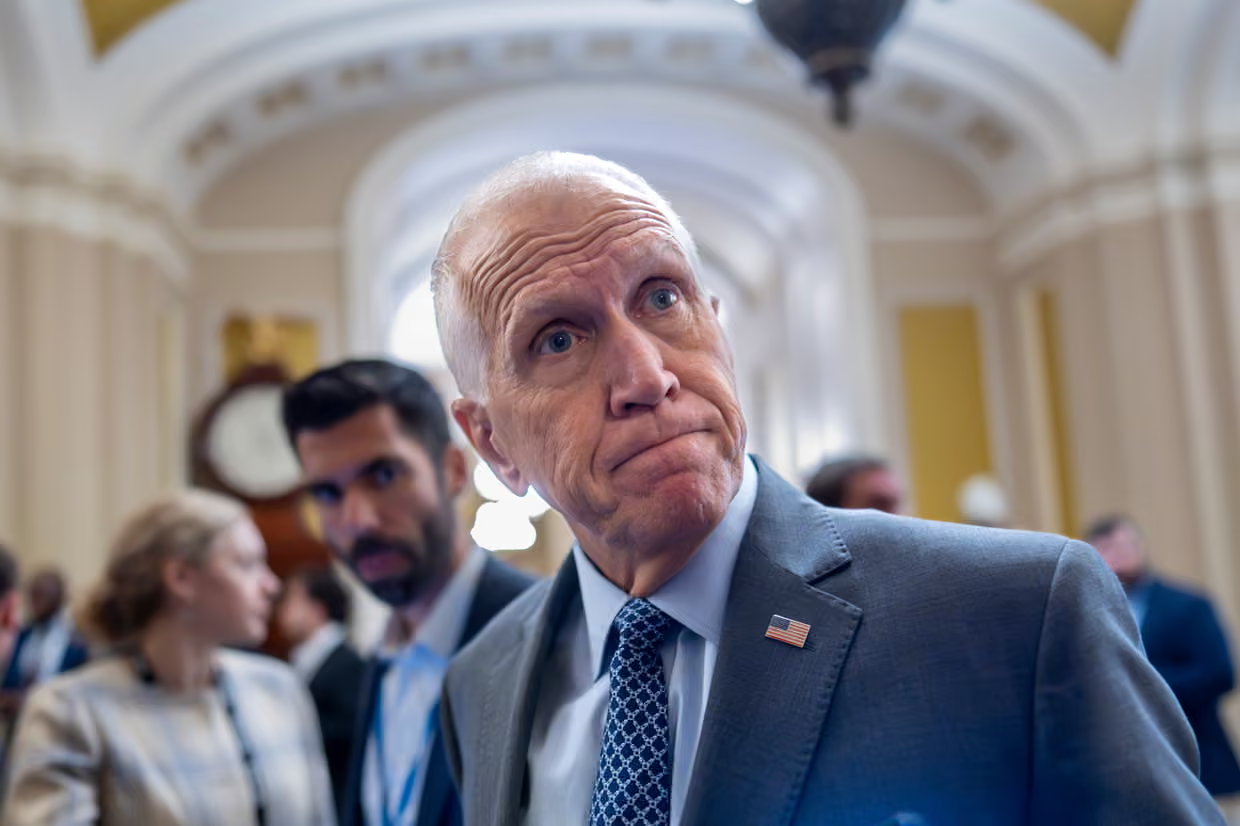
Republicans Break Ranks Over Trump’s Firing of Top Labor Stats Chief – ‘Unjustified and Dangerous’

Republicans Rebuke Trump Over Firing of Labor Statistics Chief Amid Economic Controversy
Fallout Grows After Trump Dismisses Bureau of Labor Statistics Commissioner Over Job Numbers
A rare public split has emerged among top Republican lawmakers after President Donald Trump abruptly fired the head of the U.S. Bureau of Labor Statistics (BLS), Erika McEntarfer, following the release of disappointing job figures for July.
The president’s controversial move—accompanied by unsubstantiated claims that the labor data had been manipulated to damage his image—has drawn sharp criticism from within his own party, reigniting concerns over political interference in federal agencies and data integrity.
What Sparked the Controversy?
The BLS’s July 2025 jobs report showed that the U.S. economy added only 73,000 jobs, far below forecasts. Even more troubling for economists and investors was a downward revision of 258,000 jobs from the previous two months, signaling a more serious economic slowdown than previously reported.
The report also included:
- Sluggish consumer spending
- Decreased GDP growth in Q2
- Signs of cooling labor demand across multiple sectors
Rather than address the economic data substantively, Trump lashed out at the BLS, accusing it of being part of a broader effort to undermine his leadership and electoral prospects.
“These numbers were RIGGED in order to make the Republicans, and ME, look bad,” Trump posted on his social media platform. “The economy is actually BOOMING.”
Shortly afterward, Erika McEntarfer, a respected labor economist and the BLS commissioner since 2023, was fired without formal explanation.
GOP Lawmakers Push Back: “A Line Has Been Crossed”
While Trump’s loyalist base cheered the move as part of his ongoing battle against what he calls the “deep state,” several senior Republicans have publicly rebuked the decision.
Senator Mitt Romney (R-UT) said in a statement:
“Firing a career economist over data you don’t like is not leadership—it’s authoritarian behavior.”
Senator John Thune (R-SD), a member of Republican leadership, warned the firing undermines public trust in federal institutions:
“The BLS plays a vital, nonpartisan role. Politicizing economic data is dangerous and short-sighted.”
Even Senator J.D. Vance (R-OH), a staunch Trump ally, expressed concern, calling the action “a serious overreach” in an interview, though he stopped short of directly criticizing the president.
Who Is Erika McEntarfer?
Erika McEntarfer was appointed BLS commissioner by the Trump administration in 2023 and is widely respected in economic circles for her data-driven, apolitical approach to labor analytics.
Before leading the BLS, McEntarfer served in senior research roles at both the Census Bureau and Social Security Administration, where she specialized in longitudinal labor data and workforce trends.
Her removal has alarmed economists, who warn that punishing civil servants for producing inconvenient data could deter honest reporting and erode the country’s statistical credibility on the global stage.
Economic Implications: Markets on Edge
Financial markets reacted cautiously to the report and the political turmoil that followed:
- The Dow Jones Industrial Average dipped slightly after the jobs data release.
- Bond yields fell, reflecting investor anxiety about slowing growth.
- The U.S. dollar weakened slightly against major currencies.
Analysts say the jobs slowdown reflects underlying stress in the economy, including:
- Cooling consumer demand
- Slower wage growth
- Weak hiring in manufacturing and tech sectors
- Rising business uncertainty heading into the 2024 election cycle
One Wall Street economist remarked,
“The president can fire a messenger, but he can’t fire the underlying economic reality.”
Political Optics: A Double-Edged Sword?
While Trump’s firing of McEntarfer may play well with his core supporters—many of whom distrust federal institutions—it risks alienating moderate voters, independent economists, and even conservative policy experts who value institutional integrity.
Some political strategists view the move as a calculated distraction to shift focus away from troubling economic indicators.
But the long-term risk is clear: if federal data becomes a partisan battleground, confidence in government statistics—essential for business decisions, policymaking, and voter understanding—may erode beyond repair.
Democrats Seize the Moment
Democrats were quick to condemn the firing, using it to highlight what they see as Trump’s authoritarian tendencies.
Senate Majority Leader Chuck Schumer (D-NY) said:
“This is a dangerous and undemocratic act. Trump is punishing public servants for telling the truth.”
President Joe Biden’s campaign team released a statement calling the move “proof that Trump fears facts more than failure.”
The controversy is likely to dominate headlines in the coming weeks and may become a centerpiece of election-year debate over truth, accountability, and leadership.
What’s Next?
There is no clear indication yet of who will replace McEntarfer at the helm of the BLS, but her ouster raises serious questions about:
- The independence of U.S. statistical agencies
- How future economic data will be compiled, reviewed, and released
- Whether similar firings could happen in other data-driven federal agencies
If Trump’s team installs a more politically aligned figure to lead the BLS, it may spark a broader fight over the politicization of official economic reporting.
President Trump’s firing of Bureau of Labor Statistics Commissioner Erika McEntarfer following the release of poor job numbers has triggered a rare backlash from top Republicans, deepened political divisions, and raised alarm about the independence of federal data agencies.
While Trump insists the numbers were “rigged,” economists and lawmakers across the spectrum warn that undermining the integrity of economic data for political purposes sets a dangerous precedent—one that could have lasting consequences for public trust, market stability, and the functioning of democracy.

