
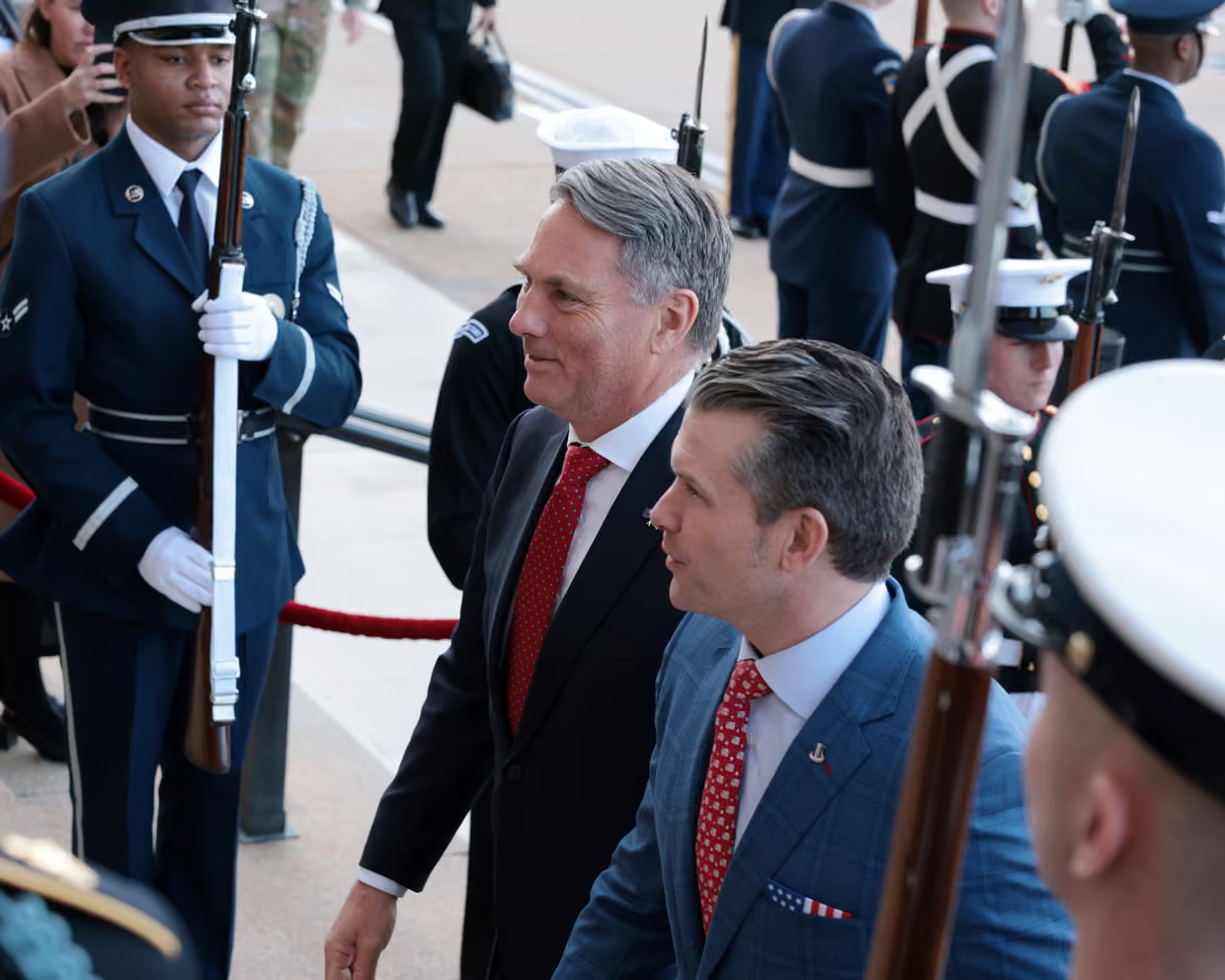
Pentagon Backtracks: Richard Marles Did Meet Pete Hegseth, Despite Initial Denial

Confusion Clouds Marles’ Washington Trip as Pentagon Reverses Statement
A diplomatic hiccup has sparked headlines and political pressure after the Pentagon backtracked on its claim that Australian Defence Minister Richard Marles did not meet with US Secretary of Defense Pete Hegseth during a sudden visit to Washington this week.
The initial denial by US officials had cast serious doubt on the Albanese government’s version of events — until it was later confirmed that the meeting did, in fact, take place.
What Was Said — And Then Unsurprisingly Unsayed
On Wednesday, US defense officials told media outlets that no formal meeting occurred between Marles and Hegseth during Marles’ unannounced trip to the US capital.
The claim fueled speculation in Australia, with opposition MPs and media outlets pressing for transparency about the purpose and outcome of the visit.
But on Thursday morning (AEST), the Pentagon reversed course.
In a statement to Guardian Australia, Pentagon chief spokesperson Sean Parnell said:
“Secretary Hegseth welcomed the opportunity to meet in person with Deputy Prime Minister Marles for the third time this year.”
This directly contradicted the earlier denial — creating further confusion and raising questions about how such a basic diplomatic fact could be miscommunicated.
Political Pressure Mounts on Albanese Government
The incident has added fuel to criticism already facing the Albanese government over its handling of foreign and defence affairs.
The lack of detail around the purpose, timing, and outcomes of Marles’ Washington trip has left the opposition — and some in the media — questioning whether the visit was as significant as initially presented.
The Pentagon’s own flip-flop only deepens the perception that the federal government isn’t being fully transparent.
Why This Meeting Matters
Marles, who also serves as Australia’s Deputy Prime Minister, holds one of the most critical roles in the country’s national security landscape. His relationship with US counterparts is central to ongoing defence collaboration — especially under the AUKUS alliance.
In recent years, the Australia-US defence partnership has expanded to include sensitive nuclear submarine technology, intelligence cooperation, and Indo-Pacific security planning.
With such high stakes, clarity and credibility around meetings like this matter — both at home and abroad.
A Communication Breakdown?
It’s still unclear why the Pentagon initially denied the meeting took place.
Was it a simple clerical error, a miscommunication between agencies, or something more political? So far, neither side has explained the discrepancy.
What is clear, though, is that both the Pentagon and the Albanese government now confirm Marles and Hegseth met — and that this was their third in-person discussion in 2025.
Final Word: Damage Done?
While the situation appears to be resolved on the surface, the mixed messaging has already created a credibility issue for both Washington and Canberra.
In a time when international defence relationships are under greater scrutiny, even minor missteps can snowball into diplomatic drama.
The Albanese government may now face increased pressure to provide greater transparency around high-level overseas visits — particularly when they involve sensitive defence matters.

