
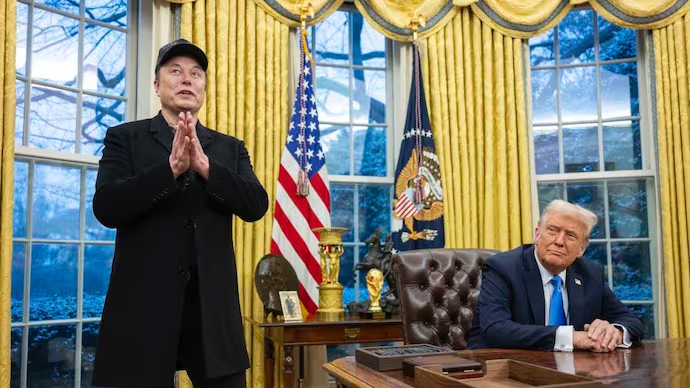
Elon Musk’s Department of Government Efficiency Cuts $21 Million in U.S. Aid to India

In a significant move, Elon Musk’s Department of Government Efficiency (DOGE) has announced the cancellation of a $21 million U.S. taxpayer-funded program aimed at increasing voter turnout in India. This decision is part of a broader initiative to reduce foreign aid expenditures under the current administration.
Background of the Canceled Program
The $21 million grant was originally allocated to support initiatives designed to enhance voter participation in India’s democratic processes. These efforts were intended to promote inclusive and participatory political engagement among Indian citizens.
Implications of the Funding Cut
The cancellation of this program has raised concerns about the future of U.S.-India relations and the impact on democratic development in India. Critics argue that such cuts could undermine efforts to strengthen democratic institutions and processes in the region.
Reactions from Indian Political Figures
Indian political leaders have expressed their views on the funding cut. Amit Malviya, a member of the Bharatiya Janata Party (BJP), took to social media to question the motives behind the U.S. funding, suggesting that it could be perceived as external interference in India’s electoral process. He stated, “Who gains from this? Not the ruling party for sure!”
Broader Context of U.S. Foreign Aid Cuts
This decision is part of a larger strategy by the U.S. administration to reduce foreign aid spending. Other programs affected include a $29 million initiative aimed at strengthening Bangladesh’s political landscape and a $10 million project for voluntary medical male circumcision in Mozambique. The administration justifies these cuts as necessary measures to save U.S. taxpayer money.
Potential Impact on U.S.-India Relations
The reduction in foreign aid funding could have implications for the diplomatic and economic relationship between the United States and India. While both nations have historically maintained strong ties, such funding cuts may lead to discussions about the future of bilateral cooperation and support for democratic initiatives.
Conclusion
Elon Musk’s leadership of the Department of Government Efficiency has led to significant changes in U.S. foreign aid policy, including the cancellation of the $21 million program intended to boost voter turnout in India. As the situation develops, it will be important to monitor the reactions from both the U.S. and Indian governments, as well as the broader international community, to understand the full impact of these policy shifts.

