
Denied Access: Maryland Congressman’s Effort to Visit Wrongfully Deported Constituent in El Salvador Blocked

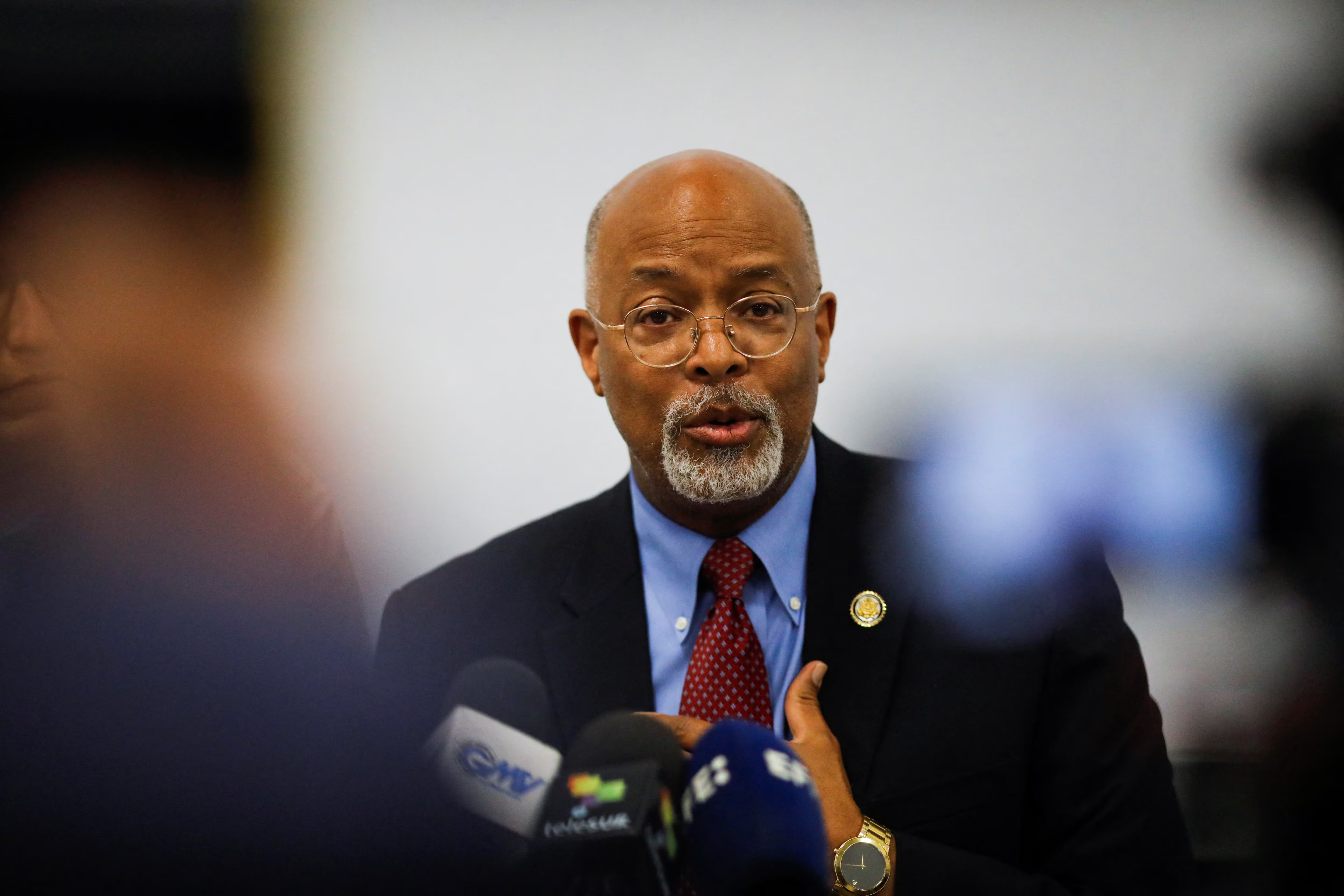
In a dramatic turn of events, Maryland Congressman Glenn Ivey traveled to El Salvador to meet Kilmar Abrego Garcia, a constituent wrongfully deported by the Trump administration. Despite a formal request from the U.S. Ambassador to El Salvador, Ivey was denied access to the Salvadoran prison where Garcia is held. This incident has sparked outrage and raised serious questions about due process and human rights.
The Case of Kilmar Abrego Garcia
A Life Torn Apart
Kilmar Abrego Garcia, a Salvadoran national, fled his home country at the age of 16 to escape gang violence and threats. He sought refuge in the United States, where he built a life, married, and started a family. In 2019, a U.S. immigration judge granted him protection from deportation, acknowledging the dangers he would face if returned to El Salvador.
The Deportation Error
In March 2025, Abrego Garcia was arrested by U.S. Immigration and Customs Enforcement (ICE) and deported to El Salvador on March 15. ICE later admitted that this deportation was due to an “administrative error,” acknowledging that they were aware of his protected status. Despite this admission, no action has been taken to return him to the U.S.
Congressman Glenn Ivey’s Efforts
A Mission to Ensure Safety
Upon learning of Garcia’s situation, Congressman Glenn Ivey took immediate action. He traveled to El Salvador, accompanied by Garcia’s attorney, to verify his well-being and advocate for his release. Before departing, Ivey secured a formal request from the U.S. Ambassador to El Salvador, seeking permission to visit Garcia in prison.
Denied Access
Upon arrival, Ivey and Garcia’s attorney were informed that they lacked the necessary permit to enter the prison. Despite the formal request, Salvadoran authorities denied them access, leaving Ivey frustrated and concerned about Garcia’s safety and the transparency of his detention.
Political and Legal Repercussions
Congressional Outrage
The denial of access has led to widespread condemnation from U.S. lawmakers. Senator Chris Van Hollen, who previously attempted to meet with Garcia during a visit to El Salvador, criticized the administration for its handling of the situation. He emphasized that the deportation was a clear violation of due process and called for immediate action to rectify the error.
Legal Actions
In response to the wrongful deportation, U.S. courts have ordered the return of Garcia to the United States. However, both the U.S. and Salvadoran governments have yet to comply with these orders, raising questions about the enforcement of judicial decisions and the protection of individual rights.
Human Rights Concerns
Conditions in El Salvador’s Prisons
Garcia is currently held in El Salvador’s Terrorism Confinement Centre (CECOT), a maximum-security facility known for its harsh conditions and overcrowding. Human rights organizations have raised alarms about the treatment of detainees in such facilities, particularly those who have not been formally charged or tried.
The Broader Implications
Garcia’s case highlights broader issues within the U.S. immigration system, including the potential for wrongful deportations and the lack of accountability when errors occur. It also underscores the challenges faced by individuals seeking asylum and the importance of upholding international human rights standards.
The wrongful deportation of Kilmar Abrego Garcia and the subsequent denial of access to verify his well-being raise serious concerns about the integrity of immigration enforcement and the protection of individual rights. As legal and political battles continue, the case serves as a stark reminder of the potential consequences of administrative errors and the importance of accountability in government actions.

