
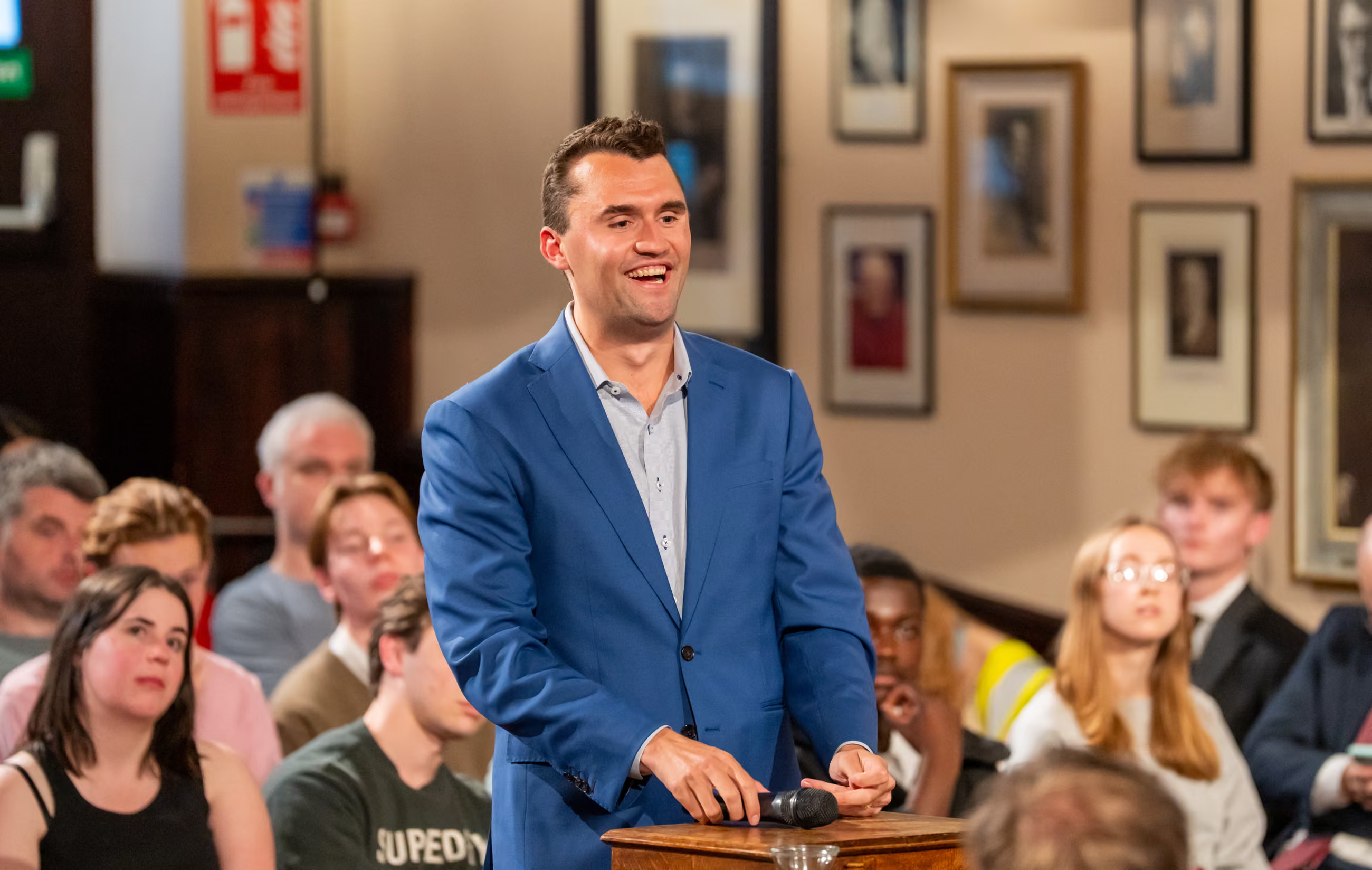
Charlie Kirk: How the Conservative Firebrand Built a Youth Movement—and Left a Controversial Legacy

Charlie Kirk, the conservative activist and founder of Turning Point USA, was shot and killed at age 31 during a college campus tour at Utah Valley University on Wednesday. In the hours after his death, tributes flooded social media from young conservatives, parents, and peers, underscoring the reach and influence of a figure who reshaped the way political messaging reaches Gen Z and millennials.
Kirk’s rise was meteoric. By March, his podcast was Apple’s top conservative podcast and the second overall news podcast. “We’re not just talking. We’re activating a revolution,” Kirk said, reflecting the activist ethos that drove him to merge politics with social media, live events, and confrontational campus engagement. His words now echo posthumously in the communities he mobilized.
A Master of the Conservative Digital Ecosystem
Kirk’s influence grew as he harnessed platforms like YouTube, X (formerly Twitter), TikTok, and live-streaming, creating a new space for politically active young conservatives outside traditional media. He founded Turning Point USA in 2012 with the aim of replicating the Obama-era youth outreach model—but for the right.
Unlike conventional political actors, Kirk blended shock value, activism, and social media savvy. He spoke directly to youth audiences on hot-button issues like abortion, transgender rights, race, and Israel-Palestine policy. Amy Binder, a sociology professor at Johns Hopkins University, described Kirk’s approach as “insurgency conservatism designed to get attention.” Indeed, his confrontational style made Turning Point events a must-see for students seeking political engagement beyond campus Republican clubs.
Cultivating a New Generation of Conservative Activists
Kirk’s influence extended far beyond events. For many young conservatives, he became a trusted voice, even more influential than established political figures. TikTok users under 30 who supported Donald Trump in 2024 cited Kirk as their go-to political commentator, despite his never holding office or serving in the White House.
“After Trump was elected in 2016, I was surprised to see how many students who were conservative were no longer identifying with the Republican party or college Republicans,” Binder noted. “They gravitated toward Turning Point because the programming was more exciting, confrontational, and culturally resonant than traditional political campaigns.”
Kirk’s activism intersected with the rise of MAGA politics, serving as a critical bridge between Trump’s brand of conservatism and younger generations seeking political identity online and on campuses. His events were intentionally provocative, blending political education with entertainment, culture wars, and controversy.
Controversial Ideology and Tactics
Kirk’s legacy is not without criticism. He openly espoused homophobic, sexist, Islamophobic, and Christian nationalist views, while promoting misinformation and conspiracy theories. Critics argue that his confrontational tactics and polarizing ideology contributed to a more divided political climate.
Yet, his ability to mobilize young voters and create a sense of belonging for politically engaged youth—even those alienated by mainstream politics—was undeniable. Turning Point USA events offered a space where students felt they could challenge dominant narratives, confront opponents, and participate in activism that was both theatrical and influential.
A Generation Mourns
Following Kirk’s death, social media erupted with grief and remembrance. Parents shared that their teenagers had grown up listening to Kirk’s content, with some reporting that their children felt “bummed” or heartbroken by the news. Conservative commentators, including Jesse Kelly, described the widespread emotional impact, noting that young conservatives mourned someone who had become a formative voice in their political lives.
Outside Timpanogos Regional Hospital in Lehi, Utah, supporters gathered with signs and embraced in tribute to Kirk’s influence, highlighting the personal connection many young Americans felt with the activist.
The Legacy of a Political Provocateur
Charlie Kirk’s story is one of paradox: a figure who was both widely celebrated and deeply controversial, a political provocateur who wielded influence without ever holding public office. For over a decade, he shaped how youth engaged with politics, leveraging social media, confrontational events, and cultural commentary to make conservatism feel accessible, urgent, and, at times, provocative.
His tactics redefined youth political engagement in the United States, blending activism, media strategy, and cultural commentary into a model that rivaled traditional political structures. Whether celebrated or criticized, Kirk’s impact on young conservatives and the broader political landscape is undeniable, leaving a legacy that will continue to spark debate and influence for years to come.

