
CBS Cancels Colbert: Did Trump Strike a Deal to Silence Late-Night TV’s Loudest Critic?

Senators Raise Alarming Questions Over Possible ‘Side Deal’ Between CBS and Trump
In a twist that feels more like a political thriller than corporate news, the decision to cancel The Late Show with Stephen Colbert has sparked a political firestorm. A group of U.S. senators is now demanding answers from the incoming owner of CBS, questioning whether Colbert’s ouster was part of a secret agreement with Donald Trump.
This controversy comes as CBS’s parent company, Paramount, prepares to merge with Skydance Media—a deal still under government review. The concern? That Colbert, a fierce Trump critic, was shown the door as a favor to the former president.
Let’s break down what’s happening, why it matters, and how it could reshape late-night TV and media freedom.
The Cancellation Heard Round the Industry
A 33-Year Legacy Comes to an End
CBS recently announced that The Late Show with Stephen Colbert will wrap up in May 2026. The network framed the decision as a financial one, pointing to rising production costs, falling ad revenues, and shifting viewer habits in the streaming era.
But the timing has everyone talking.
Just days before the cancellation, Colbert slammed CBS’s parent company for quietly paying Donald Trump $16 million in a legal settlement—a move he openly mocked on-air. Three days later, CBS announced Colbert’s show was ending.
Coincidence? Several powerful lawmakers aren’t buying it.
Senators Demand Answers
Was a Secret Deal Made with Trump?
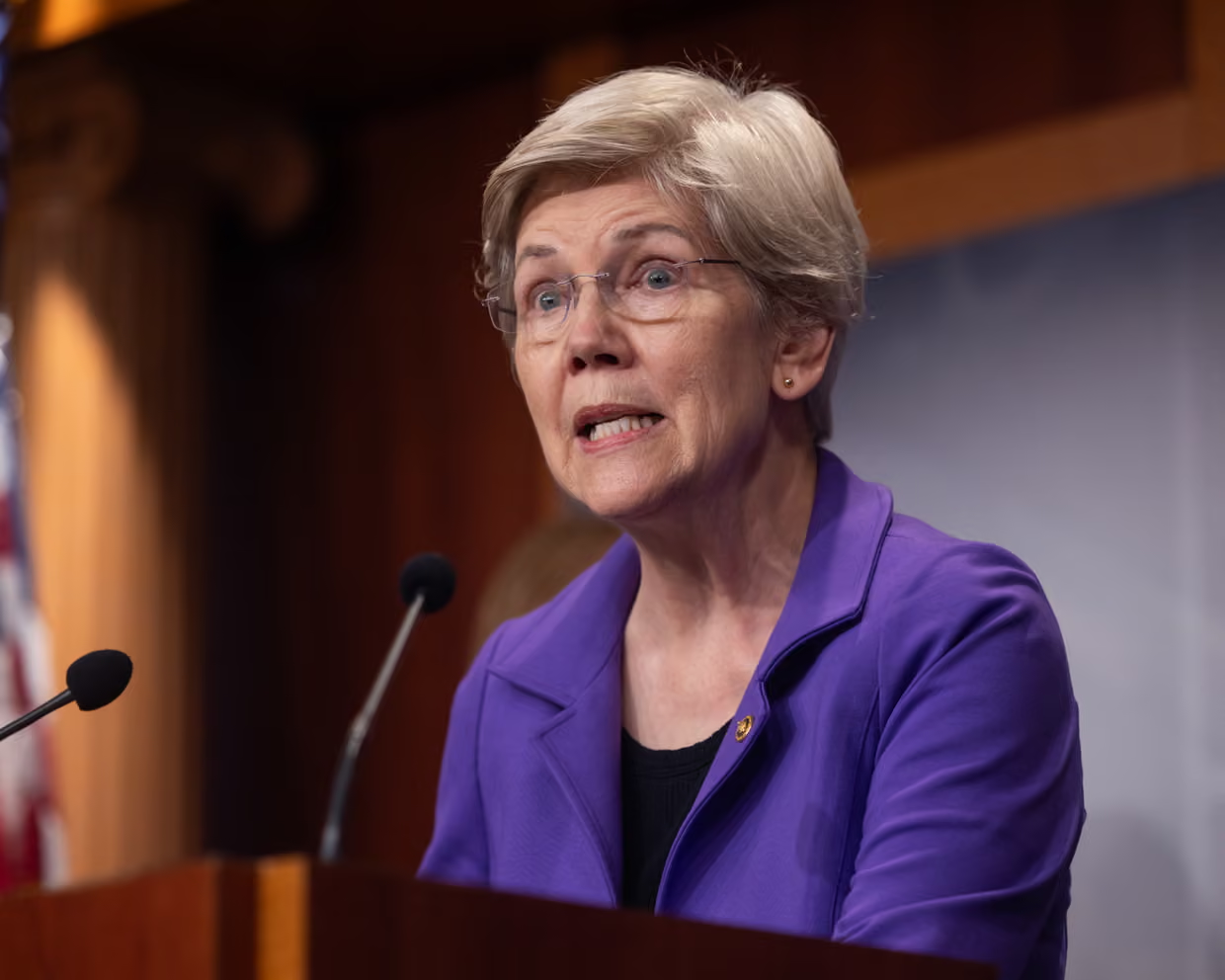
U.S. Senators Elizabeth Warren, Bernie Sanders, and Ron Wyden sent a letter to David Ellison—the CEO of Skydance Media, which is acquiring Paramount—demanding transparency. They’re asking if Ellison or any executives were involved in a “side deal” with Trump in exchange for smoother federal approval of the Paramount-Skydance merger.
They’re also pressing for clarity on whether any pressure was applied to silence Colbert and whether the cancellation was politically motivated.
Another senator, Ed Markey, raised similar concerns in a separate inquiry. He’s asking for any communications between CBS, Trump officials, or merger negotiators that could shed light on the decision to end the show.
The allegations are serious. If proven true, they could suggest not just corporate influence but potential violations of federal bribery laws.
CBS Says: Just Business, Not Politics
CBS executives are firmly denying any political influence. They claim the decision was driven solely by financial necessity.
It’s true that late-night TV isn’t what it used to be. Traditional viewership is declining, and shows are becoming expensive to produce. CBS has canceled or scaled back other late-night programming, and Colbert’s show reportedly costs tens of millions per year to run.
But critics argue that if it was purely about money, why was Colbert—who consistently ranks as the most-watched host in late-night—on the chopping block?
And why now, just after attacking his own company for a Trump payout?
Colbert’s Reaction: Stunned But Not Silent
Colbert addressed the cancellation head-on, telling his audience that 2026 would be his final season.
“I’m not being replaced,” he said. “This is all just going away.”
He also didn’t hold back on his disappointment with CBS and Paramount. After learning about the Trump settlement, Colbert joked that $16 million might buy forgiveness—clearly hinting at what he saw as corporate cowardice.
The audience booed the decision, and online reactions were swift and emotional.
Backlash from Hollywood and Beyond
The cancellation of Colbert’s show didn’t just make headlines—it ignited outrage across the entertainment industry and political spectrum.
Fellow late-night hosts publicly expressed support, with some going as far as to call CBS’s move “cowardly.” Social media lit up with fans, celebrities, and public figures voicing frustration over the loss of one of the sharpest and most politically vocal voices on television.
Donald Trump, meanwhile, celebrated the news, claiming Colbert “got fired” and predicting that other critics like Jimmy Kimmel would be “next.”
That reaction only fueled suspicions that political motives might have played a part in the decision.
Merging Politics and Media: Dangerous Territory?
This isn’t just about one show ending. It’s about the increasing concern that political pressure is creeping into entertainment media, particularly when billion-dollar mergers require federal approval.
David Ellison, the man now at the center of this storm, is the son of Oracle co-founder Larry Ellison—a known Trump supporter. That connection, paired with a settlement payment and the abrupt end to Colbert’s tenure, has raised questions about whether media independence is under threat.
Senators are rightfully asking: If the government—or powerful political figures—can influence who stays on the air, what does that mean for journalistic freedom? What happens to satire, commentary, and critique when networks fear political retaliation?
The Future of Late-Night: What Comes Next?
With Colbert’s exit, CBS has no plans to replace him. That may signal the beginning of the end for traditional late-night TV as we know it.
Streaming platforms, short-form content, and social media now dominate the attention economy. But late-night shows have long served as cultural barometers, especially in tense political climates. Removing one of the genre’s most prominent voices during an election year raises even more eyebrows.
Some fear a chilling effect across the industry—where other networks and creators become more hesitant to criticize power or take political risks.
More Than Just a Show
At its core, this controversy isn’t just about Colbert. It’s about whether corporations are making decisions out of financial necessity—or political convenience. And whether powerful figures can use their influence to silence dissenting voices.
As investigations unfold and public pressure builds, CBS and Paramount may be forced to reveal more than they intended.
Bottom Line
A beloved show is ending. That much is clear.
What’s less clear is why—and whether political backroom deals played a part. As senators demand answers and public trust wavers, this may be a turning point for how we view the relationship between media, money, and politics.
One thing’s for sure: This story is far from over.

