
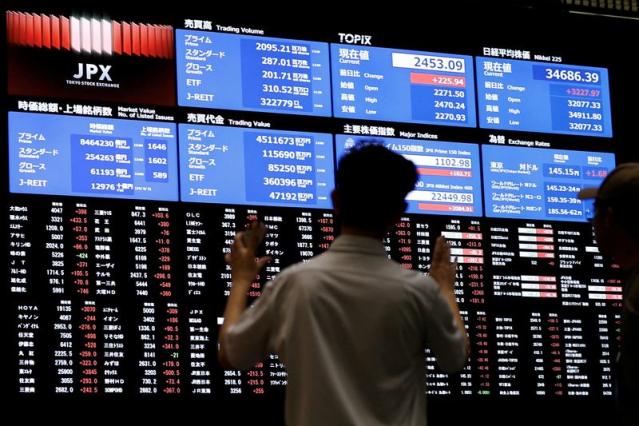

Asian stock markets plunged to a three-month low on Friday, as investors anxiously awaited crucial U.S. inflation data that could either provide relief or add to growing worries about stubbornly high prices. Meanwhile, the U.S. dollar surged to its highest levels in two years, adding to the tension in global markets. The drop in Asian shares followed a broader trend of market caution ahead of important economic numbers from the U.S.
Why Are Asian Shares Falling?
1. Anticipation of U.S. Inflation Data
Investors across Asia are on edge as they await the release of U.S. inflation data, which is expected to reveal whether inflation in the world’s largest economy is finally cooling or if it remains a major issue. The outcome of the data could heavily influence future interest rate decisions by the U.S. Federal Reserve and have ripple effects across global markets.
If inflation remains high, it could prompt the Fed to continue its aggressive rate hikes, which may raise borrowing costs and slow down economic growth. On the other hand, if inflation shows signs of easing, it could ease concerns about a potential economic slowdown, leading to a more optimistic outlook for markets.
2. The U.S. Dollar Hits Two-Year Highs
Meanwhile, the U.S. dollar continued its climb to two-year peaks, further putting pressure on Asian markets. A strong dollar typically signals confidence in the U.S. economy, but it also makes it harder for foreign investors to buy U.S. goods and assets. This can hurt emerging market economies, particularly those in Asia, where many countries rely on exports.
A rising dollar also impacts commodity prices, as many commodities like oil and gold are priced in dollars. As the dollar strengthens, it can make these commodities more expensive for countries that use other currencies, which can dampen demand.
The Global Impact: How Europe and U.S. Markets Are Reacting
1. European Markets Set to Open Lower
Europe is following Asia’s lead, with futures on the EUROSTOXX 50 (the benchmark index for the Eurozone) pointing to a 1% drop at the open. This suggests that European stocks will likely also face a rough start to the day, as traders digest the same fears about inflation and the global economy.
European investors are also waiting for the U.S. inflation data, and any surprises in the numbers could cause more volatility in the European markets. With concerns over high inflation and rising interest rates, European stocks are already feeling the pressure from global economic uncertainties.
2. U.S. Futures Fall as Well
It’s not just Asia and Europe feeling the heat—U.S. stock futures are also in the red. Nasdaq futures were down 0.6%, while S&P 500 futures fell 0.3%. The weakness in U.S. futures suggests that investors expect a slow start to U.S. markets when they open later in the day.
The market is clearly anticipating some volatility as the U.S. inflation data approaches, with traders bracing for the potential impact on both corporate earnings and consumer spending. If inflation pressures persist, it could put a damper on the U.S. stock market’s recent performance, leading to a pullback in major indices like the S&P 500 and Nasdaq.
What Does This All Mean for Investors?
1. Inflation Is Still a Big Concern
Despite some signs of economic recovery in certain regions, inflation continues to be a major worry for investors. High inflation means higher living costs, which can hurt consumer confidence and spending. Additionally, when inflation stays high, central banks like the U.S. Federal Reserve may raise interest rates to keep it in check. While this might help cool inflation, it can also hurt economic growth, making borrowing more expensive for businesses and consumers alike.
The upcoming U.S. inflation data will be a key indicator of whether inflation is under control or if it remains a persistent challenge. Investors are holding their breath, hoping for a sign that the global economy can stabilize and inflation can be brought down.
2. Currency Market Volatility
The rising strength of the U.S. dollar is also a concern for many investors. While a strong dollar indicates confidence in the U.S. economy, it can make it harder for countries outside the U.S. to maintain their economic growth. For Asian economies, a strong dollar means higher costs for imports and a decrease in the competitiveness of their exports.
Countries in emerging markets are especially vulnerable to fluctuations in the dollar, as many of them rely on foreign investment and trade. A strong dollar can lead to capital outflows, further weakening their currencies and adding to economic pressures.
3. Market Volatility Ahead of Major Data Releases
Markets tend to be more volatile ahead of major data releases like U.S. inflation numbers. This volatility can create opportunities for traders who can manage risk, but it also increases uncertainty for long-term investors. If inflation data comes in higher than expected, the volatility in both equity and currency markets could increase, leading to even sharper movements in stock prices.
On the flip side, if the data suggests inflation is under control, we might see a relief rally in stock markets as investors regain confidence in the global economy.
What’s Next for Global Markets?
The coming days will likely see more volatility across global markets as investors react to the U.S. inflation data. For now, Asian stocks are feeling the heat, with major markets hitting three-month lows and the strong U.S. dollar adding further pressure. As Europe and the U.S. gear up for their own market openings, all eyes will remain on the U.S. inflation report.
For traders and investors, it’s a time to stay vigilant. Any unexpected surprises in the U.S. inflation numbers could cause significant market shifts, while the strength of the dollar will continue to influence currency and commodity markets.
Conclusion: Brace for Impact or a Bounce?
As Asian stocks hit a three-month low and markets await key U.S. inflation data, the global financial landscape is full of uncertainty. The outcome of the U.S. inflation report will be crucial in shaping the direction of stock markets, and could either bring relief or exacerbate existing concerns about inflation and economic growth.
For now, investors are staying cautious, preparing for volatility as they await more clarity on the economic outlook. Whether we see a market bounce or a deeper pullback will depend largely on what the data shows—and how global markets respond to the results.

