

The International Monetary Fund has urged Japan to stay the course on monetary tightening and avoid loosening fiscal policy, warning that cutting the country’s consumption tax could weaken its ability to respond to future economic shocks.
In its preliminary policy recommendations, the IMF said Japan should continue gradually raising interest rates while maintaining fiscal discipline, especially as inflation dynamics evolve.
Keep Raising Rates, IMF Says
The IMF expressed support for the ongoing policy normalization by the Bank of Japan.
For years, Japan maintained ultra-loose monetary policy, including negative interest rates and yield curve control, to combat deflation and weak growth. However, as inflation has picked up, the central bank has begun carefully withdrawing monetary accommodation.
According to the IMF:
- The BOJ is appropriately reducing stimulus.
- Gradual rate hikes should continue.
- The policy rate should move toward a neutral level over time.
The fund also stressed that the central bank’s continued independence and credibility are essential for keeping inflation expectations stable.
Warning Against Government Interference
The IMF cautioned Japan’s government against interfering too heavily in monetary policy decisions.
It emphasized that preserving the BOJ’s independence would help anchor inflation expectations and maintain market confidence. Any perception of political pressure on rate decisions could undermine policy credibility and financial stability.
This message comes at a politically sensitive moment.
Spotlight on Prime Minister Sanae Takaichi
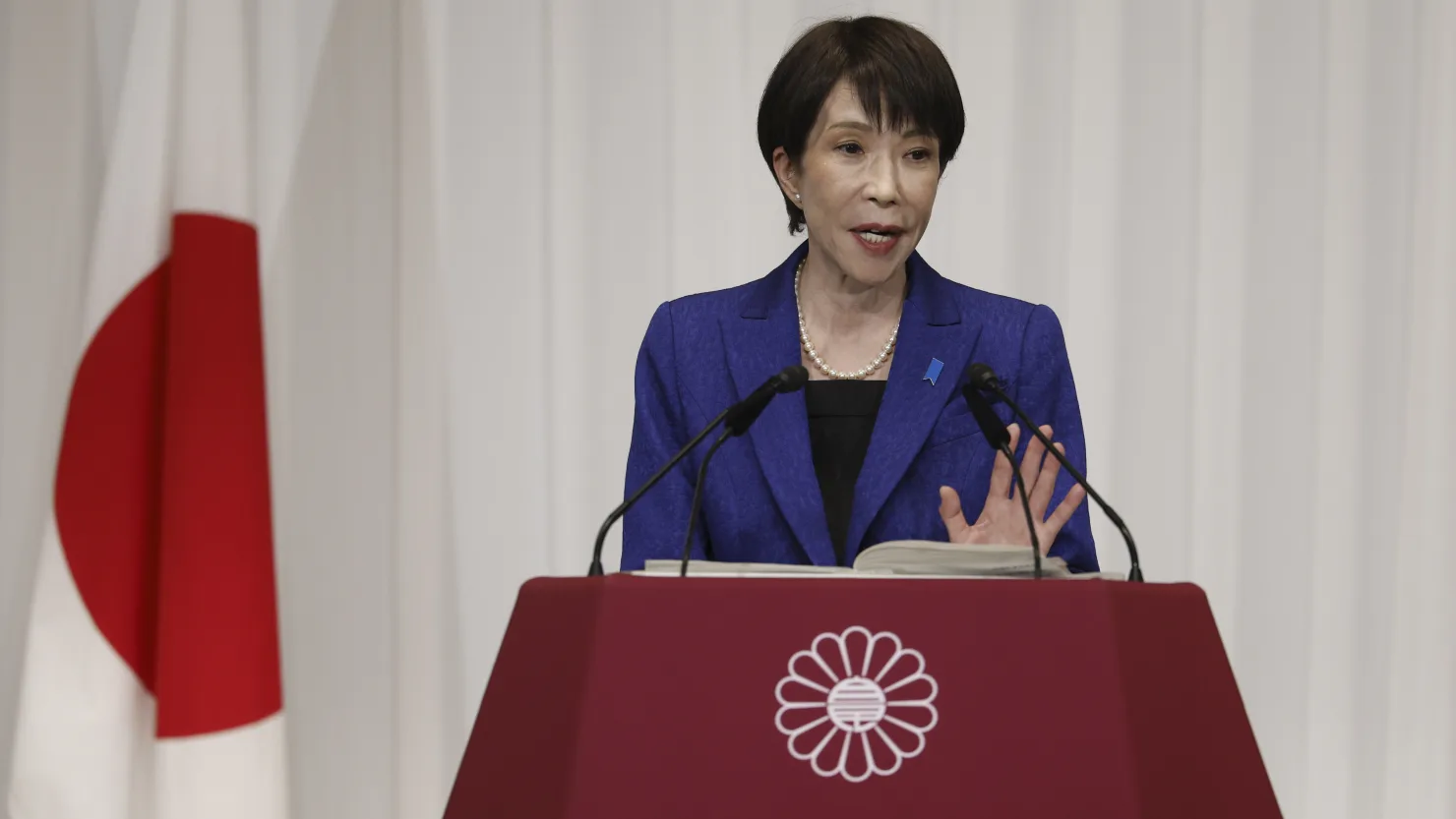
The IMF’s recommendation follows a landslide election victory by Japan’s Prime Minister Sanae Takaichi.
Takaichi is widely viewed as dovish on monetary policy, and markets are closely watching whether her administration might resist further interest rate hikes.
Adding to investor concerns, Takaichi has pledged to suspend the 8% consumption tax on food sales for two years — a move designed to ease pressure on households facing higher living costs.
IMF Pushes Back on Consumption Tax Cut
While the proposed tax suspension may offer short-term relief to consumers, the IMF warned that trimming the consumption tax would reduce fiscal space.
Japan already carries one of the highest public debt levels among advanced economies. According to the IMF, cutting tax revenues could:
- Weaken fiscal sustainability
- Reduce flexibility in responding to future crises
- Complicate efforts to stabilize debt over the long term
The fund argued that maintaining revenue streams is critical, especially as Japan faces demographic challenges and rising social security costs linked to its aging population.
Balancing Inflation, Growth and Fiscal Discipline
Japan is navigating a delicate economic phase:
- Inflation has risen after decades of stagnation.
- Wage growth is gradually improving.
- Monetary policy is shifting away from ultra-loose settings.
At the same time, households remain sensitive to price increases, and political pressure to support consumers is growing.
The IMF’s position reflects a preference for steady normalization rather than abrupt policy shifts. Gradual rate increases, combined with disciplined fiscal management, are seen as the safest path to long-term stability.
Why This Matters for Markets
Global investors are closely monitoring Japan’s policy direction.
A credible and independent central bank, combined with predictable fiscal policy, helps stabilize bond markets and currency expectations. Any perceived conflict between the government and the BOJ could increase volatility in Japanese government bonds and the yen.
The IMF’s message is clear: allow the central bank to continue tightening gradually, and avoid fiscal moves that could undermine long-term resilience.
The Road Ahead
Japan now stands at a crossroads. The government faces political pressure to ease the cost-of-living burden, while policymakers seek to solidify progress toward sustainable inflation and financial stability.
The IMF’s guidance underscores the importance of:
- Continuing gradual interest rate hikes
- Protecting central bank independence
- Preserving fiscal capacity for future shocks
How Prime Minister Takaichi balances these priorities will shape Japan’s economic trajectory in the coming years.
For now, the IMF has drawn a firm line: stay disciplined, stay gradual, and avoid policy moves that could weaken Japan’s long-term economic foundation.

