
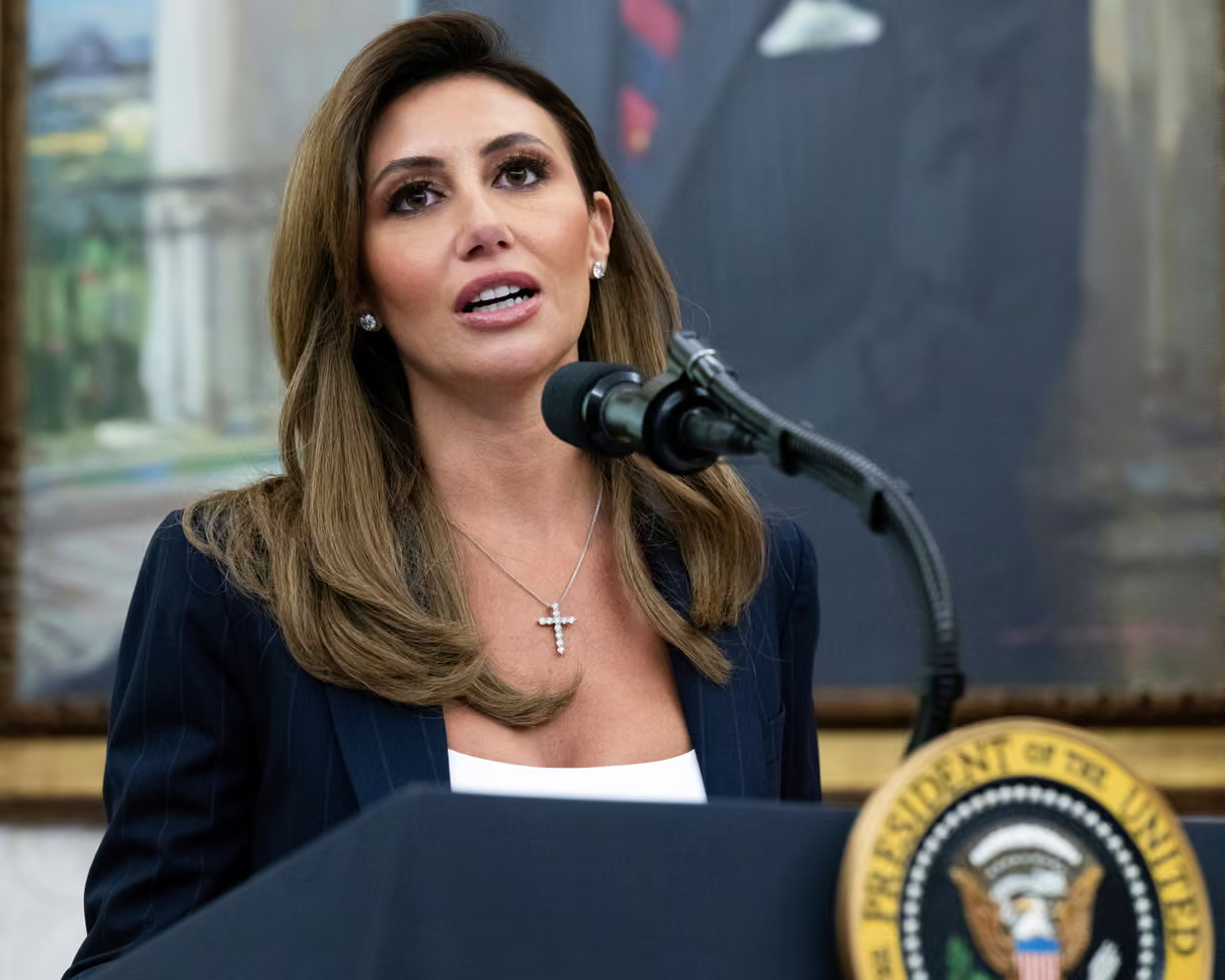
Judge Blocks Ex-Trump Lawyer Alina Habba from Serving as U.S. Attorney in New Jersey: ‘Unlawful Appointment’

A federal judge has ruled that Alina Habba, a former attorney for Donald Trump, was unlawfully serving as the United States Attorney for the District of New Jersey — in a stunning rebuke of the Biden administration’s controversial appointment strategy.
The decision, handed down Thursday by Chief U.S. District Judge Matthew Brann, disqualifies Habba from prosecuting three federal defendants who had challenged her legitimacy in court. In his written opinion, Brann criticized the U.S. government for using what he described as “a novel series of legal and personnel moves” to install and retain Habba in the role without proper authority.
“The Executive branch has perpetuated Alina Habba’s appointment… through a method that sidesteps the established statutory and constitutional framework for naming a United States Attorney,” the judge wrote.
The ruling is already sending shockwaves through political and legal circles, raising serious questions about how and why Habba — best known as a fierce legal defender of Donald Trump — was allowed to hold one of the most powerful prosecutorial positions in the country despite lacking Senate confirmation.
At the center of the controversy is the mechanism by which Habba was installed. Federal law requires that U.S. Attorneys be nominated by the President and confirmed by the Senate. Temporary appointments can be made under specific conditions, but Judge Brann found that the Justice Department had manipulated those rules to bypass the confirmation process and keep Habba in office.
According to the court filing, Habba was first brought in under a temporary appointment. When her 120-day window expired, DOJ officials shuffled personnel and applied internal orders to extend her role without triggering the need for Senate confirmation. The judge found this tactic to be in direct violation of the law.
“This court cannot allow a position of such immense power to be held through legal loopholes and procedural gymnastics,” Brann concluded.
Habba, a high-profile figure in conservative media and legal circles, rose to prominence as one of Trump’s most loyal attorneys during his post-presidency legal battles. Known for her aggressive television appearances and no-nonsense courtroom style, her appointment to a federal prosecutorial role in a Democratic administration had raised eyebrows from the beginning.
Legal analysts and civil rights groups had also flagged her appointment as potentially unconstitutional, pointing to both procedural irregularities and perceived conflicts of interest given her previous work defending Trump in federal and state investigations.
Now, with the court’s decision, those concerns have been validated — and the Department of Justice is facing tough questions about why it installed her in the first place.
“This is a clear overreach by the executive branch,” said one former federal prosecutor. “No matter how politically charged an appointment is, the law is the law. U.S. Attorneys must be confirmed. There’s no shortcut.”
As of now, it’s unclear whether the DOJ will appeal the ruling or seek to replace Habba with a new nominee who can be confirmed through the proper channels. The department has not issued a public statement in response to the decision, though officials are reportedly reviewing the ruling and weighing next steps.
Meanwhile, the three defendants at the center of the lawsuit are expected to have their cases reassigned to a new, lawfully appointed prosecutor. Defense attorneys for the trio argued that Habba lacked the authority to bring charges or oversee plea deals, and the judge agreed.
Political fallout is also likely, with Republicans seizing the opportunity to criticize the Biden administration for mishandling the appointment and undermining trust in the justice system. Some Democrats, too, have expressed discomfort with the appointment process used in this case — noting that while Habba’s political ties were unusual, the method of her installation would be dangerous regardless of who held the post.
“This shouldn’t be a partisan issue,” one legal scholar commented. “If we allow this kind of maneuvering to stand, it sets a precedent that any administration — left or right — could exploit to avoid Senate oversight.”
Habba has not commented publicly on the ruling. It remains to be seen whether she will challenge the decision or quietly exit the position.
What’s clear is that this court ruling has thrown a major wrench into the DOJ’s plans in New Jersey, disrupted several high-profile cases, and exposed a controversial appointment strategy that could come under further legal scrutiny in the months ahead.
For now, Judge Brann’s order draws a bright line: no one, regardless of political affiliation or former client, is above the law — and the proper procedures for appointing U.S. Attorneys must be followed.

