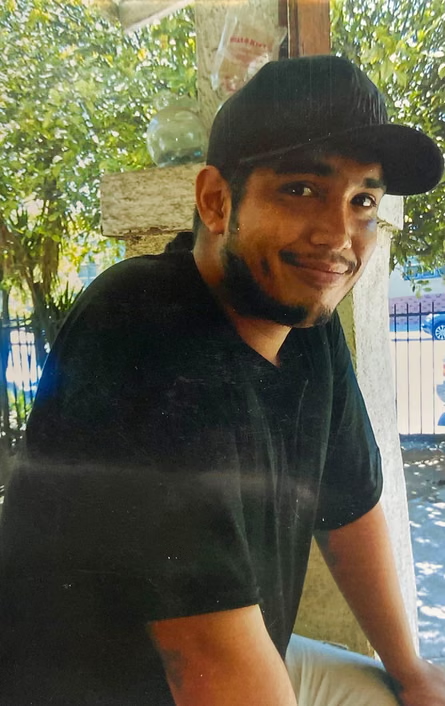
Devastating Mistake: How a Mentally Ill Man Died Alone at Cibola Correctional Center

A Tragic Story That Could Have Been Avoided
James Ramirez was just 28—a young man grappling with paranoid schizophrenia—when he died under disturbing circumstances at Cibola County Correctional Center. The facility, operated by private company CoreCivic and housing federal detainees, has become notorious for lapses in medical care and safety.
In a haunting video from the facility, Ramirez collapses repeatedly in a medical observation cell. Despite being incapacitated and restrained for nearly four hours, staff delayed calling an ambulance, citing a need for his verbal consent—even though he was barely conscious. Mic drop: a nurse is seen telling him, “If you just talk to me, we can get you to the hospital and fixed up real quick.” Yet Ramirez was hardly in any condition to respond.
What Went Wrong
By the time an ambulance was called, it was nearly six hours into Ramirez’s medical crisis. He was given ketamine and taken to a local hospital but wasn’t fully evaluated. Shockingly, he was sent back in a sedated and unstable state—and placed back into solitary confinement.
The next day, a nurse found him unresponsive and alone in the cell. When authorities arrived later, they discovered Ramirez’s body covered in blood and bruises, with visible trauma including a fractured nose and bleeding on his scalp and neck. His death shook his family to their core.
His sister described the aftermath as “devastating,” recalling how she could barely sleep or function for months. Family attorneys argue that Ramirez’s death was entirely preventable and that negligence played a direct role.
Cibola’s Troubled History
Ramirez’s death is just one of at least 15 recorded since 2018 at Cibola. Other tragedies include suicides, overdoses, and deaths tied to chronic diseases. Tragically, rules requiring constant observation for mentally ill detainees—like Ramirez—were clearly broken.
The facility is also under federal investigation: the FBI has described a spreading “drug trafficking epidemic,” with some guards accused of colluding with gangs to smuggle narcotics like fentanyl and meth into the facility while videotaped evidence in multiple cases was deleted.
In another young case, a 29-year-old mother died of a lethal overdose just two days into her detention, allegedly without intervention. In yet another case from earlier years, a transgender detainee died after suffering medical neglect. In both scenarios, video footage from key moments was erased.
Why It Matters
This isn’t just a local correctional scandal—it raises urgent questions about the safety and oversight of incarcerated individuals under government contract. When a facility entrusted with care responds with indifference, the consequences are fatal.
Detention facilities must uphold constitutional standards and basic human dignity. But when those promises are replaced with cost-cutting or unethical decisions, lives suffer. Families are left with loss—and with questions about how safety and oversight failed someone their loved one depended on.
The Road Ahead
A federal review of the facility was conducted earlier this year, but the full findings remain undisclosed. Meanwhile, the family of James Ramirez has filed a wrongful death lawsuit against CoreCivic and the local hospital, seeking accountability.
Civil rights advocates are pressing for major reforms—better healthcare staffing, guaranteed oversight, and an end to private contracts that prioritize profit over people. They argue that no human deserves to die alone, untreated, simply because systems failed.