
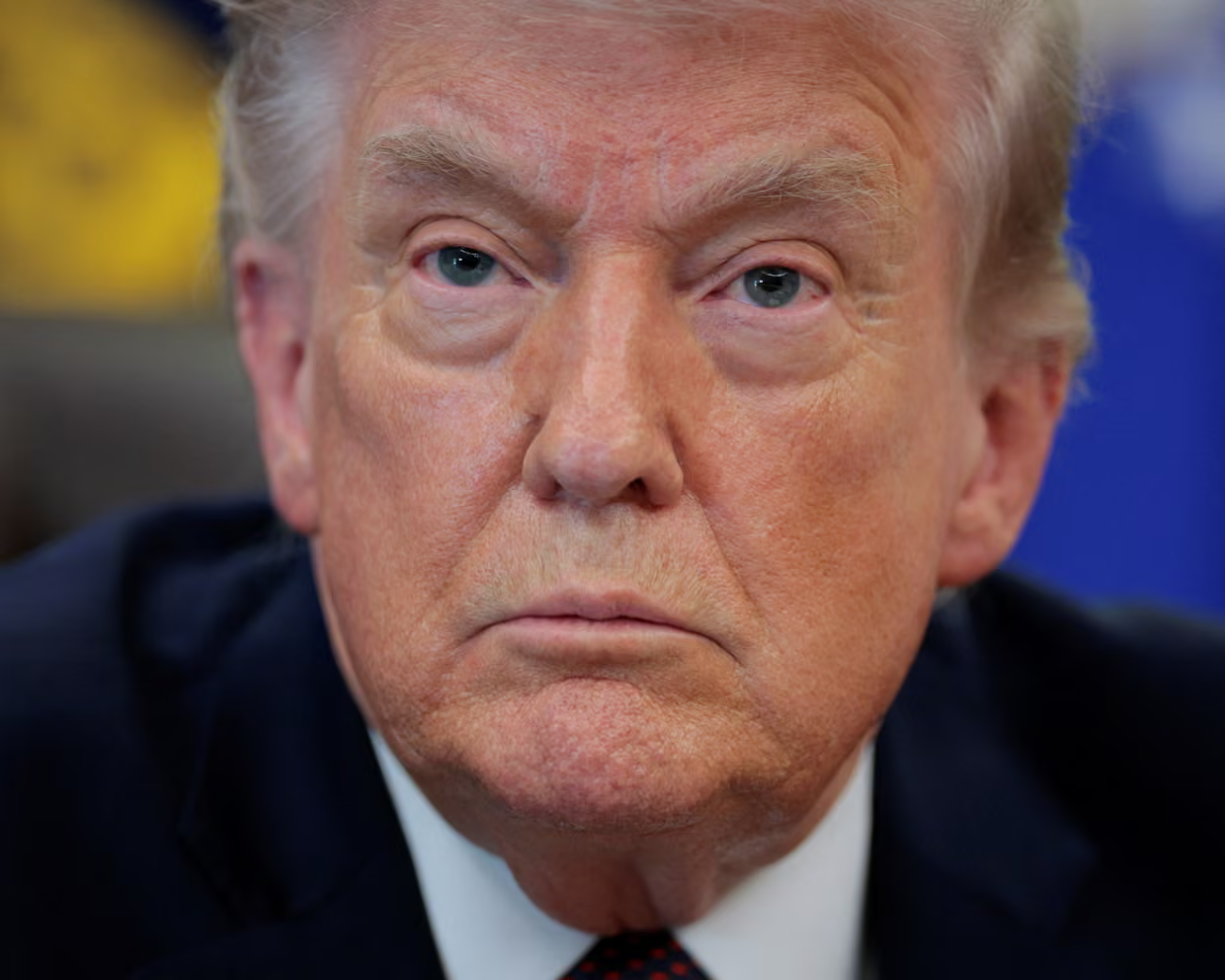

Trump’s Remarks Deepen Rift with European Allies
Tensions between the United States and its European allies have escalated sharply after Donald Trump launched a public attack on countries refusing to support his administration’s stance on the Iran conflict.
In a series of comments posted on his platform, Truth Social, Trump criticized European nations for hesitating to join the war effort, bluntly telling them to “go get your own oil” if they were worried about rising fuel prices.
The remarks have added fuel to an already tense geopolitical situation, further straining transatlantic relationships at a critical time.
Europe Pushes Back Against War Involvement
Key Allies Take a Stand
Several major European powers have signaled their reluctance to become directly involved in the conflict. Notably:
- France reportedly blocked Israeli aircraft carrying weapons from passing through its airspace
- Italy declined last-minute requests for US bombers to land in Sicily
- The United Kingdom has also shown hesitation about deeper involvement
These moves reflect growing concern across Europe about the risks of escalation and the broader consequences of the conflict.
A Shift in Transatlantic Relations
The disagreement marks a significant moment in US-Europe relations. Traditionally close allies are now finding themselves divided over strategy, priorities, and the potential fallout of the war.
This divergence highlights a deeper issue — a lack of consensus on how to handle one of the most volatile conflicts in recent years.
Iran Conflict Sends Shockwaves Through Global Economy
Oil Prices Surge After Trump’s Comments
Trump’s remarks have had immediate economic consequences. His suggestion that countries should secure oil supplies independently — even by force — has alarmed markets.
As a result:
- Oil prices spiked sharply
- Energy markets became more volatile
- Concerns about supply security intensified
The Middle East remains a critical hub for global energy, and any instability in the region quickly impacts economies worldwide.
Growing Global Frustration
Economic Fallout Felt Worldwide
The ongoing conflict is not just a political issue — it is increasingly becoming an economic crisis. Countries around the world are facing:
- Rising fuel costs
- Increased inflation
- Slower economic growth
This has led to frustration among governments and citizens alike, many of whom are already dealing with post-pandemic economic challenges.
Allies Question US Strategy
Trump’s aggressive rhetoric and approach to the conflict have raised questions among allies about the long-term strategy and its potential consequences.
Concerns include:
- Risk of wider regional war
- Disruption to global trade routes
- Long-term damage to diplomatic relations
Europe’s More Independent Stance
A New Direction?
Europe’s response may signal a shift toward a more independent foreign policy approach. Rather than automatically aligning with Washington, countries are increasingly making decisions based on their own national interests.
This could mark the beginning of:
- A more divided Western alliance
- Increased diplomatic tensions
- New global power dynamics
What This Means Going Forward
Short-Term Implications
In the near term, the situation is likely to lead to:
- Continued volatility in energy markets
- Strained diplomatic relations
- Heightened uncertainty in global politics
Long-Term Consequences
If divisions persist, the long-term impact could include:
- A redefinition of US-Europe alliances
- Greater geopolitical fragmentation
- Increased challenges in managing global crises
Final Thoughts
The latest developments underscore how quickly alliances can shift in times of conflict. Donald Trump’s remarks have not only intensified tensions with European allies but also highlighted deeper disagreements about how to handle global crises.
As the Iran conflict continues to unfold, the world is watching closely — not just the battlefield, but the relationships between nations that will shape the future of global stability.

