US Signals Stronger Action Against Russia Over Ukraine Conflict: Trump Aide Bessent Issues Stern Warning

Washington Ready to Take Firm Steps if Russia Continues Aggression
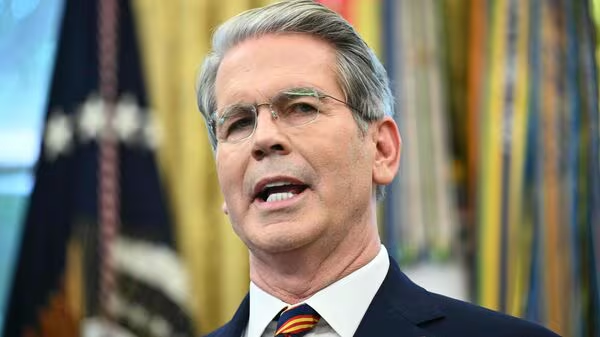
In a significant development that underscores the escalating tensions surrounding the war in Ukraine, US Treasury Secretary Scott Bessent, a senior aide to former President Donald Trump, issued a stern warning on Tuesday. Bessent stated that the United States is “willing to take strong measures” against Russia if it refuses to pull back from its military campaign in Ukraine.
His comments follow a series of high-level discussions between US and European Union officials aimed at tightening sanctions on Moscow. Over Monday and Tuesday, representatives from both sides have been meeting to coordinate efforts, with a shared understanding that “business as usual has not worked” in deterring Russia’s continued aggression.
The Context: Russia’s Persistence in Ukraine
Despite numerous rounds of sanctions imposed since the conflict began, Russia has not altered its military posture in Ukraine. An EU official, speaking on background, confirmed that Russia’s leadership shows no signs of retreat, prompting urgent discussions between Washington and Brussels on how to increase pressure.
The meetings are seen as a turning point, with both the US and EU seeking to expand the scope of sanctions beyond existing measures. Proposed actions include targeting additional sectors of the Russian economy, tightening financial restrictions, and limiting Russia’s access to technology and global markets.
Bessent’s Strong Message: “Business as Usual Has Not Worked”
Speaking at a press briefing, Bessent did not mince words. He emphasized that the United States is prepared to escalate sanctions and pursue “firm action” to compel Russia to reconsider its course.
“Business as usual has not worked,” Bessent said, signaling frustration with the incremental approach taken so far. “We are exploring additional avenues to ensure that the cost of aggression is felt by those enabling it.”
His remarks reflect a broader shift in US policy discussions, moving away from measured responses and toward more assertive tactics aimed at crippling Russia’s war efforts.
Coordination with Europe: Talks with the EU Sanctions Envoy
Bessent’s comments came shortly after he engaged in talks with the EU’s sanctions envoy on Monday. Both sides reaffirmed their commitment to working in tandem, exchanging intelligence, financial data, and legal frameworks that would allow sanctions to have maximum impact.
Officials noted that coordinating sanctions across jurisdictions is crucial in preventing Moscow from exploiting gaps between regulatory regimes. Discussions also focused on sanctioning individuals, entities, and industries that continue to fund or supply Russia’s military infrastructure.
An EU official described the meetings as “intense but necessary,” acknowledging that unified action is the most effective way to send a clear message.
Potential Areas of Expanded Sanctions
While no new sanctions have been officially announced yet, experts believe the next round of restrictions could include:
- Targeting Russian energy exports beyond existing limits
- Restricting access to Western financial institutions and payment systems
- Freezing assets of key oligarchs and defense companies
- Banning dual-use technologies that could assist Russia’s military capabilities
- Cutting off supply chains that indirectly support Russia’s war infrastructure
Such measures, while disruptive, are seen as necessary steps to signal global intolerance for continued aggression.
Balancing Global Markets and Humanitarian Needs
Sanctions experts and policy advisers caution that the next round of measures will need to be carefully calibrated to avoid unintended humanitarian fallout. Energy disruptions, supply shortages, and financial market instability are likely to ripple across global economies if sanctions are too broad or poorly implemented.
Nevertheless, both the US and EU officials agree that the priority must be to limit Russia’s ability to sustain military operations without crippling civilian access to essential goods and services.
Bessent reiterated that any new sanctions would be “targeted, strategic, and designed to pressure key actors, not the broader population.”
Implications for the Future of the War
The warning signals a shift toward a more confrontational posture, one that may escalate diplomatic and economic tensions between Russia and Western powers. Analysts predict that if sanctions are strengthened as planned, Russia may face significant disruptions in energy supply chains, technology imports, and defense contracting.
However, there is also concern that Russia may retaliate with its own economic measures or seek closer partnerships with nations outside the Western bloc, including China and Iran.
Bessent’s statement underscores that the coming months will be critical. Sanctions are intended not only as punitive tools but as bargaining levers to force Russia back to negotiations.
A Message to Allies and Adversaries
In closing, Bessent’s remarks serve as both a warning and a rallying call. By coordinating with Europe and signaling readiness to act decisively, the US is sending a clear message to allies that it remains committed to collective security efforts, while simultaneously warning adversaries that continued aggression will be met with substantial consequences.
The coming weeks will likely determine whether sanctions can influence Russia’s strategy or further entrench the conflict, but Washington’s resolve appears firm.
As Russia continues its military operations in Ukraine, the United States, led by Scott Bessent, is signaling a readiness to escalate sanctions and hold Moscow accountable. With coordinated efforts alongside the EU, targeted financial and trade restrictions are being considered to disrupt Russia’s capacity to wage war. While challenges remain, the message is clear: incremental responses are no longer sufficient, and stronger measures may be necessary to achieve peace and stability.