
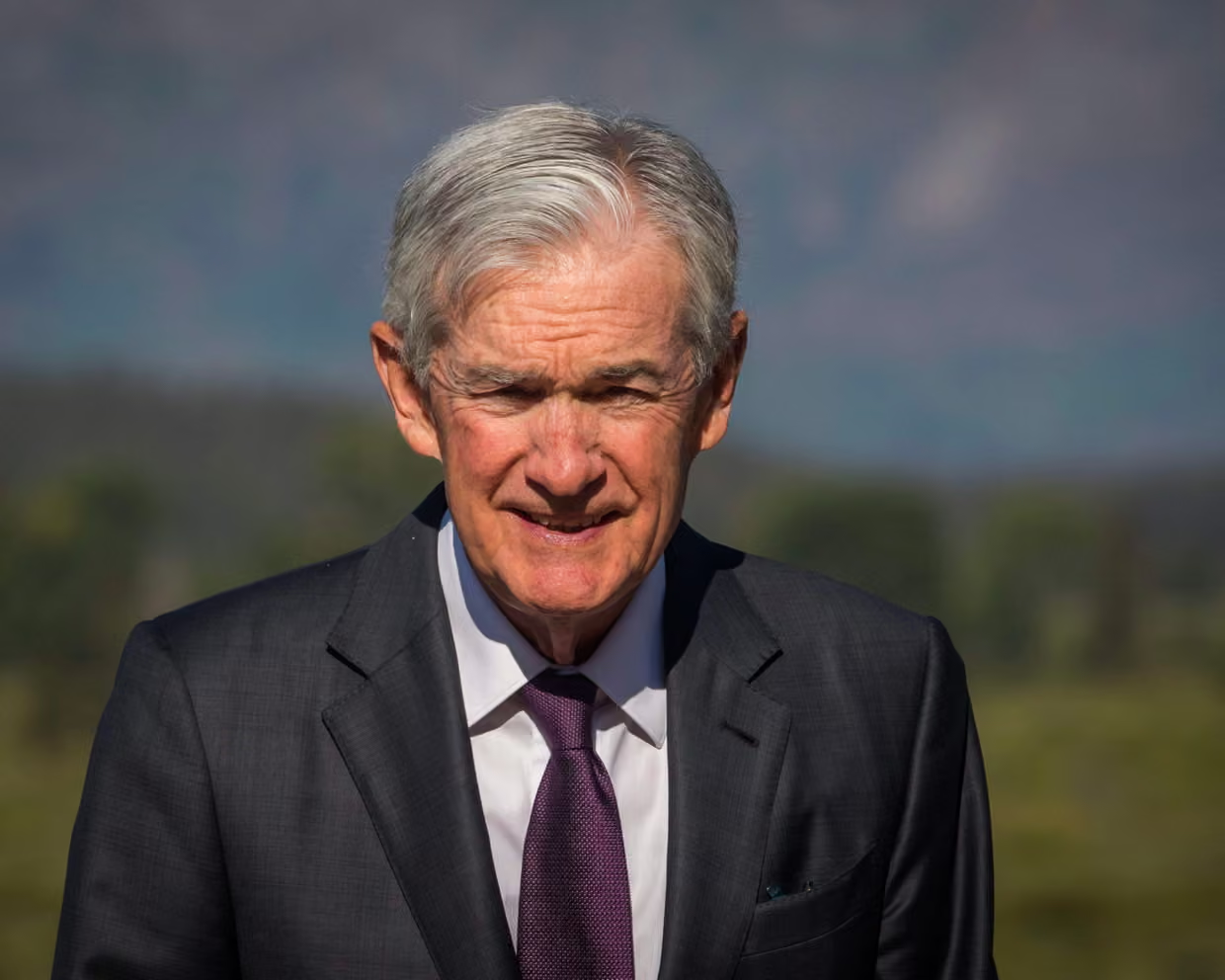
Fed Set to Cut Interest Rates – But Trump Still Won’t Be HappyBy Lauren Aratani | New York

Wall Street surged on Friday as markets welcomed the clearest sign yet that the Federal Reserve is preparing to cut interest rates this fall. Investors cheered the news, hoping lower borrowing costs will buoy corporate profits and soften the blow from ongoing global trade uncertainty. But not everyone is celebrating — especially Donald Trump, who has long accused the Fed of holding back the U.S. economy.
Despite growing indications that rate cuts are imminent, the former president remains unsatisfied, continuing his public campaign to pressure Fed Chair Jerome Powell to act more aggressively. Trump’s economic rhetoric, rooted in a belief that interest rates should have been near-zero for much of his presidency, is once again clashing with the Fed’s more cautious approach.
A Delicate Balancing Act for the Fed
The U.S. central bank is walking a tightrope. It faces mounting pressure to stimulate the economy in the face of slowing global growth, high interest rates, and the lingering effects of the tariff wars started under Trump’s administration. Yet the Fed must also ensure that rate cuts don’t reignite inflation, which, although cooling, remains above the bank’s 2% target.
Friday’s rally followed remarks from key Fed officials suggesting that the first rate cut could come as early as October or November, depending on incoming data. “We’re seeing signs that the economy is softening, especially in sectors like housing, manufacturing, and consumer spending,” one Fed governor said off the record. “We need to stay ahead of that curve.”
For the markets, this was welcome news. The S&P 500 jumped nearly 2% on the day, and the Nasdaq notched its highest close in nearly six months. Bond yields, which move inversely to prices, also dropped as traders priced in a high probability of a rate cut before year-end.
Trump’s Longstanding Feud With the Fed
None of this, however, seems to please Donald Trump.
Throughout his presidency — and now as he eyes a return to the White House — Trump has repeatedly lambasted Jerome Powell, the very Fed chair he appointed in 2018. He’s accused Powell of “wrecking the economy” by raising rates too quickly in the early years of his term and failing to slash them fast enough during economic downturns.
Now, with the economy cooling and Trump looking to paint a bleak picture under President Biden, he’s once again calling for dramatic rate cuts, claiming they are needed to “undo the damage” caused by both Biden’s policies and Powell’s decisions.
“He’s still too slow,” Trump said during a recent interview. “Other countries are slashing rates, boosting growth — and we’re falling behind because of Powell’s stubbornness.”
The Politics of Monetary Policy
Trump’s criticism of the Fed is part of a broader political strategy aimed at undermining Biden’s economic narrative. As inflation has cooled and unemployment remains low, the White House has tried to frame the U.S. recovery as steady and resilient. But if Trump can convince voters that monetary policy is misaligned or even harmful, it plays into his message that “everything was better” under his leadership.
The Fed, of course, insists that it remains independent and free from political influence — a principle it has fiercely guarded, particularly under Powell. But Trump’s attacks, amplified by right-wing media, are testing that boundary.
And Powell is feeling the heat from both sides. Progressives argue that keeping rates high could hurt working-class Americans, increase joblessness, and stall growth. Fiscal conservatives worry that premature rate cuts could reignite inflation and undo the Fed’s progress since the post-pandemic surge.
Markets Are Betting on a Pivot
Despite all the noise, investors believe a pivot is inevitable. Inflation is coming down, the labor market is showing signs of cooling, and the global economic environment remains fragile — from a sluggish China to ongoing wars in Europe and the Middle East.
“The data is pushing the Fed toward cuts whether they like it or not,” said Mark Zandi, chief economist at Moody’s Analytics. “They need to protect the recovery. Holding rates too high for too long could backfire.”
Still, analysts warn that markets may be too optimistic, pricing in as many as three rate cuts over the next year, while the Fed itself has only hinted at one or two — and even those are conditional on how inflation and growth evolve.
What This Means for Everyday Americans
For consumers, potential rate cuts could bring some relief. Mortgage rates, which have hovered around 7%, may finally begin to drop, offering hope to prospective homebuyers. Credit card rates, however, often remain stubbornly high even in a lower-rate environment.
Small businesses and borrowers could benefit from more accessible credit, while savers may see their high-yield savings returns begin to shrink.
In short, the coming months will test not only the Federal Reserve’s resolve and independence, but also the patience of political leaders like Trump, who see monetary policy as a key battlefield ahead of the 2024 election.
As Powell continues to strike a tone of cautious pragmatism, he may find himself — once again — in the crosshairs of a political storm he cannot control.

