
Asia-Pacific Markets Struggle Amid Fears of Persistent Inflation and Slower Growth

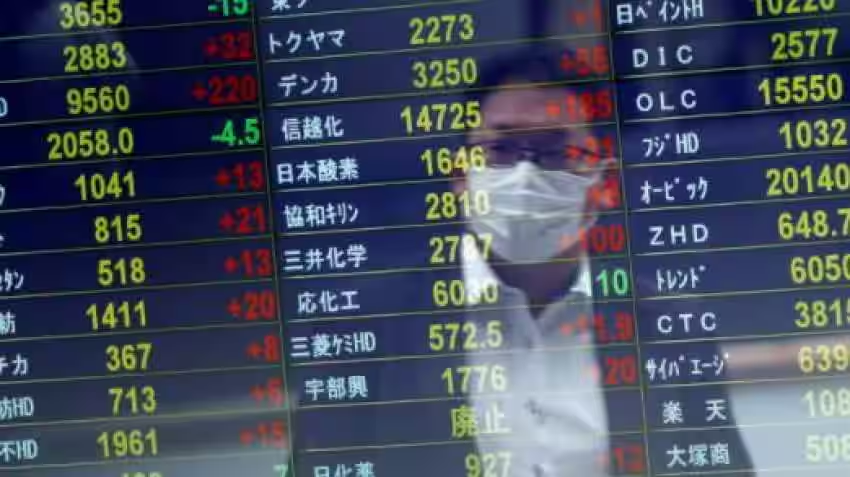
Asia-Pacific markets are facing tough times, with most of them closing lower on Monday. Wall Street’s disappointing performance on Friday, which saw its worst session of the year, has spooked investors. U.S. economic data suggests that the economy might be slowing down, but inflation is still stubbornly high, and this has caused concern across global markets.
In this article, we’ll break down what’s happening in Asia-Pacific markets and why investors are worried about inflation and slower economic growth.
U.S. Economic Data Spooks Investors Worldwide
Wall Street’s Worst Session of the Year
Last Friday, U.S. stocks had their worst day of the year, sending shockwaves through global markets. Economic data from the U.S. painted a concerning picture: the economy may be slowing down, but inflation continues to stay higher than expected. This combination is worrying investors who had hoped inflation would cool down faster.
With rising inflation and signs of slower growth, people are starting to wonder whether the U.S. can avoid a recession. This uncertainty spread to the markets in Asia-Pacific, contributing to a mostly negative trading day.
Asian Markets Feel the Pressure: Key Indexes Struggle
China’s Stock Market Takes a Hit
In China, the stock market didn’t escape the negative sentiment. The CSI300 index, which tracks the largest companies in mainland China, fell by 0.22%, closing at 3,969.72. Even though Chinese markets had been performing well in recent sessions, the economic worries from the U.S. overshadowed any previous gains.
Hong Kong’s Hang Seng Index Slips
Hong Kong’s Hang Seng index also experienced a dip, down 0.58% to 23,341.61. This came after the index had reached a nearly three-year high just the day before. The sudden drop reflects how sensitive markets are to any signs of economic weakness, especially when they come from a major economy like the U.S.
Indian Stocks Continue to Struggle
In India, the markets continued their negative trend, with the Nifty 50 index falling 1.08%. Similarly, the BSE Sensex lost 1.03%. These losses reflect investor concerns about the broader global economic outlook. Even though India’s economy is relatively strong compared to others, it is still not immune to global market movements.
South Korea and Australia Experience Similar Declines
South Korea’s Kospi index ended the day 0.35% lower at 2,645.27. The small-cap Kosdaq index also saw a minor decline, closing down by 0.17% at 773.33. While these losses weren’t massive, they add to the broader negative trend seen across the region.
On a more positive note, Australia’s S&P/ASX 200 index managed to break its five-session losing streak, ending 0.14% higher at 8,308.20. Even though this was a small gain, it’s a sign that Australian markets are still holding up, despite the overall negative mood.
Singapore’s Inflation Shows Signs of Improvement
Core Inflation Edges Down
In Singapore, there was some good news on the inflation front. Singapore’s core inflation, which excludes the cost of housing and private transport, rose just 0.8% year-on-year in January. This is the lowest rate since June 2021 and much lower than the 1.5% that experts had expected. This suggests that inflationary pressures may be easing in Singapore, which is a relief for both consumers and businesses.
Headline Inflation Also Lower Than Expected
Headline inflation, which includes all goods and services, came in at 1.2% year-on-year. This is the lowest it has been since February 2021 and much lower than the 2.15% that had been predicted by economists. These numbers are a positive sign for Singapore, as they indicate that the country’s inflation issues may be under control, at least for now.
Why Is Inflation Still a Concern?
Sticky Inflation Creates Global Worry
Inflation has been a persistent issue for many countries, not just in the U.S. but around the world. While inflation rates in some regions are starting to drop, the stubbornly high levels in others are causing concern. In the U.S., inflation remains higher than the Federal Reserve would like, and there are fears that the central bank might have to continue raising interest rates to combat it. This could slow down economic growth further, affecting markets globally.
Inflation that doesn’t come down quickly enough is a big challenge for economies. It puts pressure on consumers, businesses, and governments alike, and it’s one of the main reasons why markets are reacting negatively right now.
What’s Next for Asia-Pacific Markets?
Uncertainty Remains, But Investors Are Watching Closely
As the war against inflation continues and economic growth slows down, investors in the Asia-Pacific region will be keeping a close eye on the situation. U.S. economic data will remain a key factor influencing markets, but the regional effects could also play a significant role. If inflation remains sticky or the global economy continues to slow, we could see more volatility in the stock markets.
However, the improvement in Singapore’s inflation numbers provides a glimmer of hope that not all markets are in the same boat. Countries that can manage their inflation better may be able to navigate these challenging economic conditions more smoothly.
Conclusion: A Tough Road Ahead
The markets in Asia-Pacific are grappling with a mix of concerns about inflation and slower economic growth. While some countries, like Singapore, are seeing signs of improvement, others are struggling with negative sentiment driven by global economic data. As we move forward, the outlook remains uncertain, and investors will need to stay alert to changes in inflation and growth trends.
While Australia’s stock market showed a small gain, most major indexes in the region saw losses, reflecting the broader mood of caution. As inflation remains stubbornly high, the possibility of slower economic growth continues to weigh on markets, leaving investors unsure about what lies ahead.

