
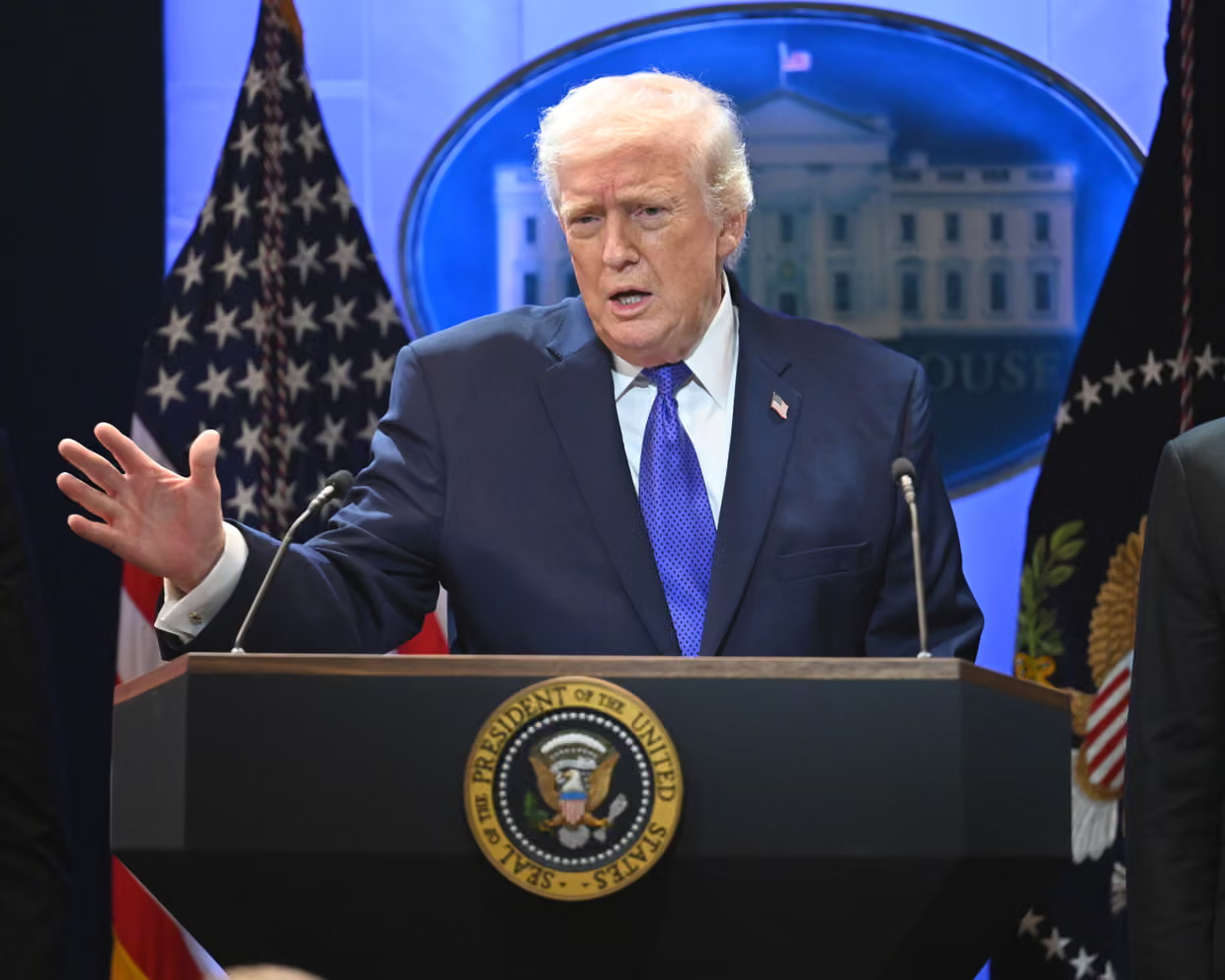

Donald Trump’s ambitious tariff strategy has hit a major roadblock, leaving global markets reeling and economies scrambling for clarity. The US Supreme Court ruled that much of Trump’s 2025 tariff regime was illegal, introducing confusion for countries and businesses that had been racing to negotiate deals with the US.
The decision comes after Trump’s high-profile announcement of Japanese-backed projects under a proposed $550 billion investment surge into the United States, part of his broader attempt to reshape international trade.
Japan and Other Economies Left in the Lurch
Japan was among the first nations to strike a deal, pledging significant investments in exchange for reduced US tariffs on exports. Other major economies, including the UK, India, and the European Union, had also been navigating uncertainty under Trump’s sweeping tariff changes.
The Supreme Court ruling throws all these arrangements into question, leaving governments unsure of where they stand and complicating international negotiations.
Supreme Court Ruling Sparks Legal and Political Shockwaves
The US Supreme Court found that Trump had overstepped his executive authority in imposing global tariffs. By bypassing Congress, his administration acted outside the legal framework, effectively invalidating major portions of the trade policy.
The ruling not only frustrated Trump personally but also sent a ripple of uncertainty through global markets. Investors struggled to interpret the decision and assess the stability of US trade commitments.
Signs from protests underscored public frustration, with demonstrators holding placards reading “tariff-ied SCOTUS stop selling us out” and “do not destroy we the people.”
Global Market Reaction
Following the ruling, markets experienced turbulence as traders and investors attempted to recalibrate:
- Stock indices fell amid fears of disrupted trade flows
- Currency markets reflected uncertainty about US economic policy
- Multinational corporations faced questions on supply chain planning and tariff exposure
The ruling emphasizes how legal constraints in the US can have immediate, wide-reaching impacts on global economic stability.
Trump’s Trade Agenda Under Pressure
Trump’s broader trade agenda, which had aimed to assert US dominance and reshape global commerce, now faces serious challenges:
- Planned investment projects risk delays or renegotiation
- Tariff uncertainty undermines confidence in US trade commitments
- Future executive attempts to impose trade restrictions may face heightened scrutiny
The legal defeat highlights the limits of executive power in shaping international economic policy and may force a reevaluation of US trade strategy.
The Path Forward for Global Economies
Countries engaged with the US under the 2025 tariff regime must now navigate new uncertainties:
- Reassess agreements and renegotiate terms with US counterparts
- Evaluate exposure to potential changes in tariff enforcement
- Maintain investor confidence amid policy volatility
For businesses and governments alike, the ruling underscores the importance of legal clarity in global trade and the risks of relying on unilateral executive actions.
The US Supreme Court’s decision striking down key aspects of Donald Trump’s tariff program has introduced confusion and uncertainty into global markets. While Trump touted economic victories just days earlier, the ruling revealed the fragility of unilateral trade measures and left nations and investors scrambling to understand the implications.
Global economies, from Japan to the EU, now face the challenge of recalibrating strategies in a world where US trade policy may be legally constrained, unpredictable, and fraught with political tension.

